

COP31 in Antalya: Who Will Lead the Talks and What Key Participants Will Promote
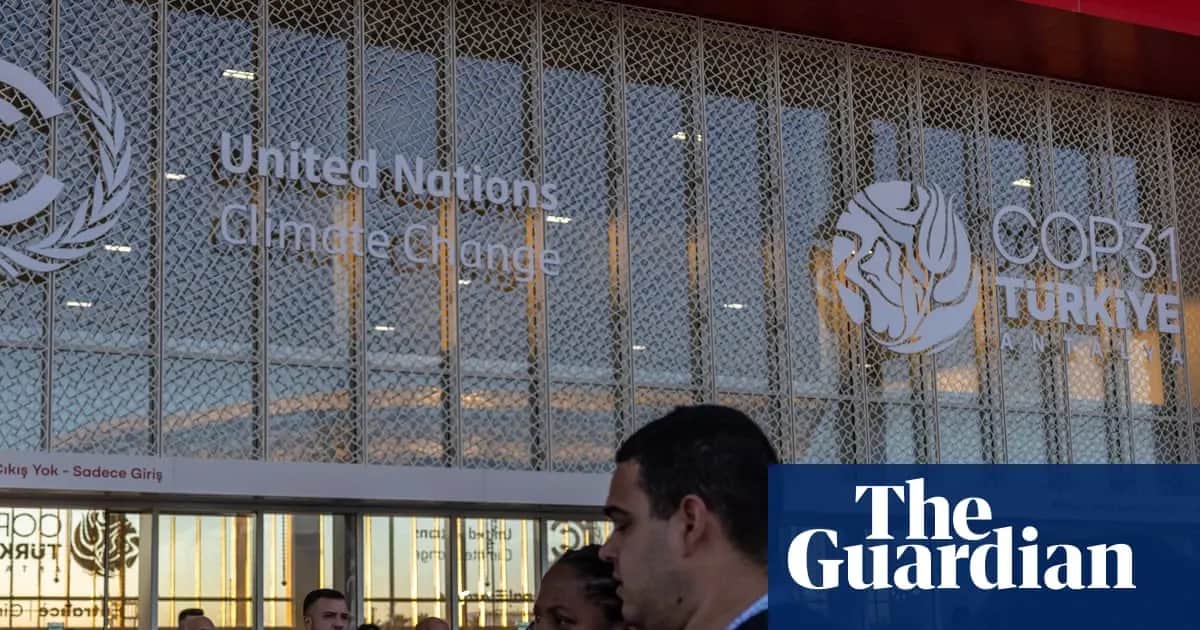
At the UN COP31 climate conference in Antalya, Australia will lead the negotiations, while Turkey will oversee the agenda for voluntary initiatives. According to The Guardian’s overview, key participants include representatives of Brazil, China, India, the UK, the EU and the UN, while no official US delegation is expected.
The division of roles was a compromise after a heated dispute between Australia and Turkey over who would host the summit. The talks will take place in the Turkish city of Antalya: Australia will set the overall direction of the process, while the Turkish government will oversee the so-called Action Agenda, a programme of voluntary initiatives. At the same time, according to The Guardian, the dispute over the venue left a sour note, and Australia appeared to be a rather unenthusiastic host of the conference.
Reported by The Guardian.
Australia’s climate and energy minister, Chris Bowen, will lead the negotiations day to day. His portfolio also covers some of the country’s energy supply: the publication notes that at times he has had to support fossil fuels while also stressing the need to transition to clean energy. Australia remains a major exporter of fossil fuels, but has invested heavily in renewables; the spread of solar power has already led to consumers sometimes being offered free electricity. Prime Minister Anthony Albanese is due to speak at the opening of the leaders’ segment, but The Guardian predicts he is unlikely to stay long.
Turkish President Recep Tayyip Erdoğan, The Guardian writes, has previously shown little interest in climate and environmental issues. Environment Minister Murat Kurum will now oversee the agenda for voluntary initiatives. Erdoğan has used this role to promote an issue important to his wife, Emine: reducing waste and developing a circular economy. She has called for an end to a throwaway culture and for recycling to be preferred over landfilling. The source notes, however, that Turkey has landfill sites from which significant amounts of methane leak.
Another agenda item is the electrification of heating, transport and industry to replace fossil fuels with electricity. According to The Guardian, this focus is linked to International Energy Agency head Fatih Birol, whom the publication describes as one of the advisers. In his view, electrification could halve the amount of energy needed; the source identifies expanding renewable electricity generation as the next important step.
Brazilian President Luiz Inácio Lula da Silva is expected to arrive at the summit with two roadmaps. One concerns the global transition away from fossil fuels, and the other aims to halt and reverse deforestation. These are non-binding plans without set deadlines or strict requirements for governments: they outline steps governments can take to achieve these goals.
Chinese leader Xi Jinping will not attend COP31, but the country’s importance to the negotiations will be determined by its scale and influence on energy. According to The Guardian, China is the world’s second-largest economy and the largest source of greenhouse gas emissions: it accounts for nearly a third of annual global carbon emissions, largely because of its use of fossil fuels. At the same time, the country is investing in renewable energy, reshaping the global energy market. The publication also notes that Beijing’s important partners include both oil-exporting countries and states that buy Chinese products and support a low-carbon future.
India withdrew its bid to host COP33 in 2028 this year without explaining why. The Guardian describes the country’s climate policy as marked by internal tension: India is developing renewable energy and has the world’s third-largest installed capacity of such sources, after China and the US, but coal still provides about 70% of its electricity. India’s delegation is led by Environment Minister Bhupender Yadav; the publication also mentions his mutually supportive relationship with UK minister Ed Miliband.
The United States is not expected to attend COP31 as an official delegation. The Guardian links this to the country’s planned withdrawal from the UN Framework Convention on Climate Change, which was expected to soon make its participation impossible. At the same time, the publication suggests that some Democratic members of Congress, state governors and business representatives may travel to Antalya. This is a prediction about individual participants, not confirmation that an official delegation will be present.
The UK will be represented at the summit by Prime Minister Andy Burnham, for whom this will be his first COP. He is expected to be accompanied at the leaders’ segment by Foreign Secretary Ed Miliband, who has experience in climate negotiations and, according to participants, helped foster cooperation at COP30. The UK delegation will be led in the final stages of the talks by Energy and Net Zero Minister Miatta Fahnbulleh.
After the summit, the UK is due to take over the rotating G20 presidency. According to The Guardian, London plans to focus the group’s attention on resilience to the effects of the climate crisis over the course of the year. In the EU, the final stages of COP31 will be coordinated by Dutch European Commissioner for Climate Wopke Hoekstra. European Commission President Ursula von der Leyen’s attendance has not been confirmed; The Guardian predicts that Hoekstra may make competition with China one of the EU’s main priorities.
For UN Secretary-General António Guterres, COP31 will be his last climate summit in the role; his successor has not yet been chosen. The negotiations will be led by Simon Stiell, executive secretary of the UN Framework Convention on Climate Change. This year, an additional task for him will be managing relations between the two co-hosts and the negotiating parties, which are at odds.
The Guardian gives particular attention to Saudi Arabia’s position. The publication describes it as a country with a long history of obstructing climate negotiations and reports that at COP30 the Saudi delegation held out until the last moment against including in the final text a reference to the pledge to transition away from fossil fuels made at COP28 in Dubai in 2023. The newspaper also reports that Saudi Arabia, along with China, India, Russia and Kenya, called for the next comprehensive assessment of climate science by the Intergovernmental Panel on Climate Change to be postponed. Its publication was expected in 2028; in the publication’s assessment, a delay of a year or more could weaken the sense of urgency when assessing implementation of the Paris Agreement.