

COP31 in Antalya: Fossil Fuels, Climate Finance and Electrification
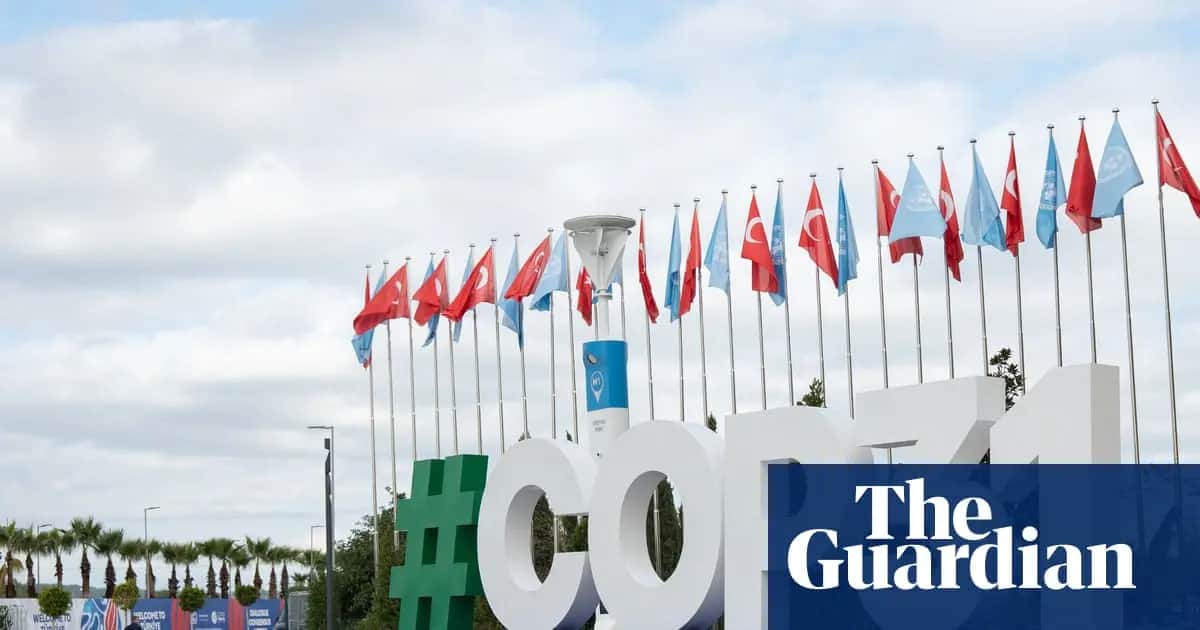
COP31 will take place in Antalya on November 9–20, with representatives from more than 190 countries attending. Turkey will host the summit, while Australia will lead the formal negotiations; key issues include the transition away from fossil fuels, climate finance and electrification.
The division of roles between the two countries was a compromise after a contest over who would chair the summit. Australia will be responsible for negotiations on just transition programmes, climate finance and the action needed to move closer to the Paris Agreement goal of limiting the rise in global temperatures to 1.5°C above pre-industrial levels. Turkey will lead the so-called action agenda: voluntary agreements intended to help achieve the agreement’s goals but not legally binding.
Reported by The Guardian.
The Turkish-led programme is expected to focus on reducing waste and methane, developing a circular economy, food security and electrifying the global economy. The Guardian calls the latter one of the summit’s most important areas. The meeting comes amid ongoing efforts to cut greenhouse gas emissions and accelerate the transition to low-emission technologies.
According to The Guardian, the goal of limiting warming to 1.5°C has already been exceeded. However, the UN believes that rapid emissions cuts could reduce the extent of the overshoot and make it possible to return to a lower temperature level by the end of the century. To achieve this, countries need to move away from their dependence on fossil fuels more quickly and deploy low-carbon technologies.
In this context, two Brazilian roadmaps will attract attention: one on transitioning away from fossil fuels and the other on ending deforestation. They are intended to outline possible ways to achieve these goals. Disputes over fossil fuels, however, remain difficult: the issue requires almost unanimous support from participants to be included on the formal agenda.
In 2023, at COP28, the final agreement explicitly mentioned fossil fuels for the first time and called for a transition away from their use. At the same time, the document set neither a timeline nor a plan for such a transition. At COP31, the issue is to be considered through a non-binding global transition roadmap—that is, outside a formal decision that would set binding timelines for countries.
Another important issue is assistance for developing countries, which need to cope with the effects of climate disasters and adapt their infrastructure to increasingly severe extreme weather events. Following the disaster in Nepal, the country gained access to the global loss and damage fund, intended to rescue and restore communities affected by climate disasters. But, according to the publication, this is not enough, and poor countries also lack resources for adaptation.
Financial difficulties are compounded by cuts to international aid from wealthy countries and rising interest rates, which increase the debt burden on poorer states. The Guardian therefore lists progress on climate finance for developing countries among the possible outcomes of COP31. Other expected benchmarks include support for Brazil’s plans and resolving a dispute over climate science that complicated previous meetings of the Intergovernmental Panel on Climate Change.
The publication also counts clarifying the just transition mechanism among the possible outcomes. It is intended to help workers whose jobs depend on fossil fuels adapt to a low-carbon economy. Amid geopolitical tensions and economic difficulties, countries may settle for a quiet meeting, but these issues remain among the expectations for the negotiations.
Some political agreements may develop outside the formal negotiations. Earlier, more than 60 countries, including the UK, the EU and a number of developing states, met in Colombia and pledged to transition away from fossil fuels. The Guardian predicts that COP31 could strengthen this coalition by bringing in new participants.
The US will not participate in the summit at the federal government level: President Donald Trump withdrew the country from the Paris climate agreement. At the same time, several influential members of the US Congress, business representatives and American civil society organisations are expected in Antalya. The absence of the White House, therefore, will not mean that there are no American participants at all.
The article also gives examples of how electrification and renewable energy can change the energy landscape. According to the publication, China’s oil imports are likely to fall by approximately 12% this year amid the rapid spread of electric vehicles, while the country’s renewable generation capacity has already surpassed that of coal. In Pakistan, rooftop solar panels generate about a quarter of the electricity consumed.
The Guardian also notes that nearly half of new cars in countries ranging from Vietnam to some EU member states are already electric. Oxford University professor Jan Rosenow believes that the high efficiency of electric technologies could potentially halve global primary energy consumption. This is one reason electrification has been placed at the centre of the COP31 agenda.
Among the political participants, the publication expects Brazil’s president, Luiz Inácio Lula da Silva, to attend. The summit will be his first international trip since his re-election; The Guardian predicts that he will actively advocate for the climate agenda. At the same time, the outcome of the negotiations remains uncertain: possible achievements include concrete steps on finance, fossil fuels and a just transition, rather than guaranteed decisions.