

Seagate launches hybrid FireCuda Forge: HDD and separate SSD work as one storage system
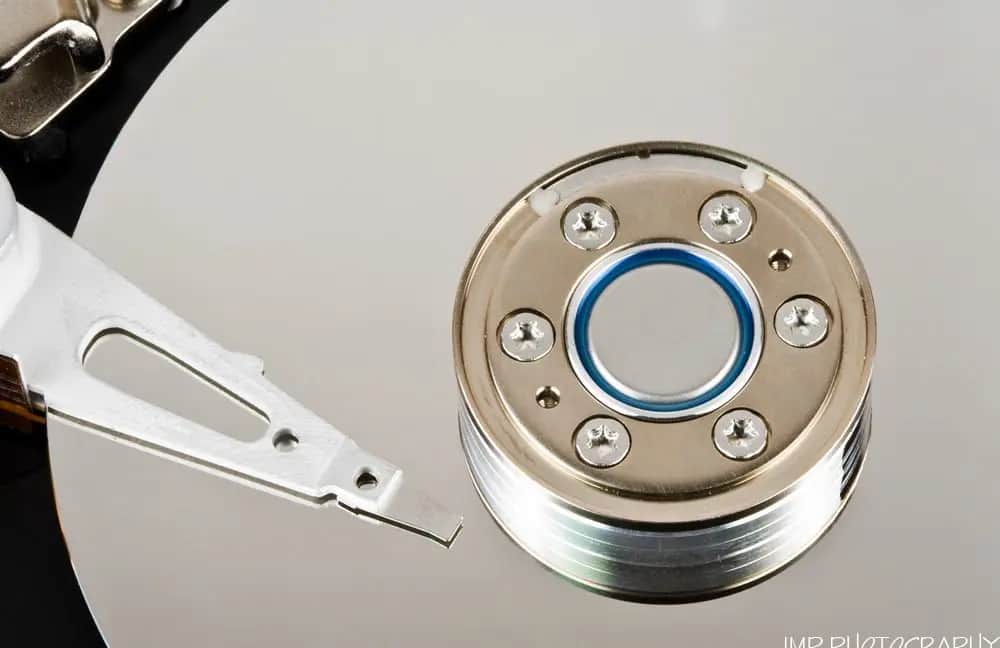
Seagate has introduced FireCuda Forge, hybrid drives that pair a high-capacity HDD with a separate user-supplied SSD. According to Ars Technica, the new drives are already available in two configurations, but the company has yet to disclose important details about data allocation and how the system behaves if a drive fails.
In the new lineup, Seagate offers an 8 TB HDD for $699 or a 20 TB model for $899. An SSD is not included and must be purchased separately. Ars Technica reports that the drives were already on sale in Seagate’s online store.
Reported by arstechnica.com.
FireCuda Forge requires an M.2 2280 NVMe solid-state drive compatible with PCIe Gen3 or later. The maximum supported SSD capacity is 1 TB. Seagate specifies minimum speeds of 2400 MB/s for reads and 2000 MB/s for writes and recommends a model with a DRAM cache. The company says the combined system delivers read speeds of up to 2500 MB/s and write speeds of up to 2000 MB/s; it also lists support for USB4, Windows 11, and macOS 26 or later.
Storage management is handled by the Alkemi platform, Seagate’s first such system integrated directly into a drive enclosure. According to a company statement cited by Ars, the platform is designed to learn and adapt, keeping frequently needed content on the SSD while using the HDD to grow the file library. The system is supposed to present both drives to the user as a single storage volume.
However, the term “intelligent data allocation” does not yet explain exactly how Alkemi works. Ars notes that the information released so far does not make clear whether the system uses the SSD as a cache, automatically moves files between the two tiers, or combines both approaches. Seagate has also not explained where new data goes during initial setup.
It is also unclear what happens if one of the drives fails. At the time of Ars’s publication, Seagate had not provided technical documentation on how Alkemi behaves during a drive failure or repair. It is therefore unclear whether the storage as a whole would remain accessible if the HDD or SSD stopped working.
These questions bring to mind earlier hybrid solutions. Apple, for example, introduced Fusion Drive for the Mac mini in 2012. As Ars describes it, the system placed data in 128 KB blocks: information was typically written to the SSD first and then moved to the HDD, while frequently accessed files could remain on the faster drive. Ars notes that a physical failure of either drive could make it harder to recover the shared volume.
The hybrid approach fell out of favor as SSDs became cheaper. Now, Ars says, high storage prices are making it attractive again: solid-state memory is fast, but mechanical drives remain a comparatively inexpensive option for storing large amounts of data. Ars links the broader price increases to the AI boom.