

Ukraine’s Defense Intelligence: Russia received nearly one million tonnes of fuel by sea in three months
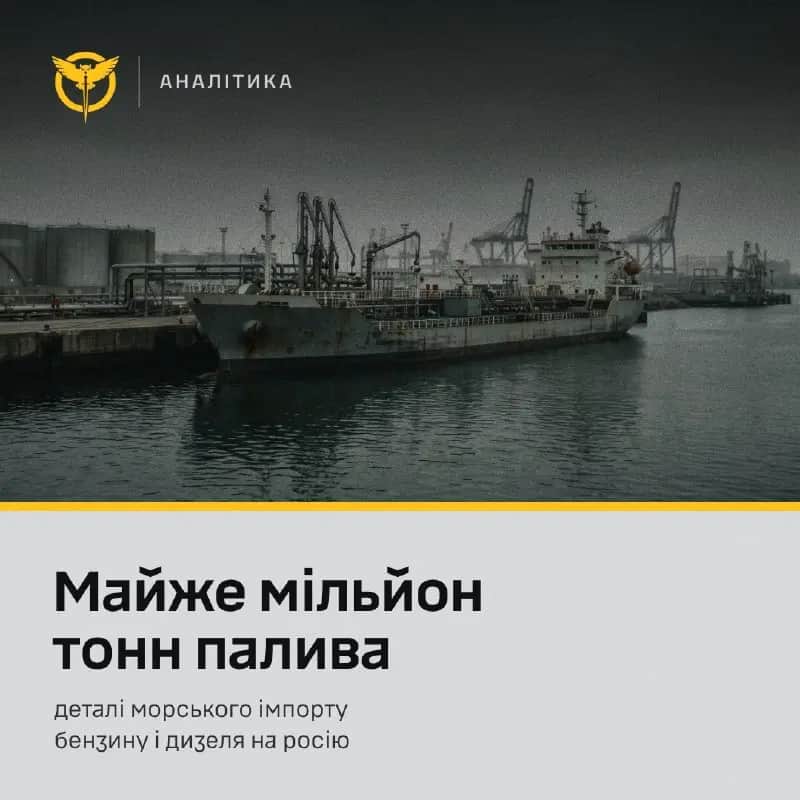
From July 18 to October 22, 2026, about 989 thousand tonnes of fuel and high-octane additives were delivered to Russia by sea. According to the Main Directorate of Intelligence of Ukraine’s Ministry of Defense, these were 39 shipments carried by 30 tankers.
Gasoline made up the largest share of the cargo, at 724.2 thousand tonnes, or 73.2%. Another 128.1 thousand tonnes of diesel (13%), 106.7 thousand tonnes of Jet A-1 aviation fuel (10.8%), and 30 thousand tonnes of MTBE high-octane additive (3%) were also delivered, the Main Directorate of Intelligence said.
Reported by Головне управління розвідки МО України.
The largest volumes were received by ports in northwestern Russia, accounting for 42.3% of deliveries. Another 32.8% went to Baltic Sea ports, 24% to Vladivostok and Nakhodka in the Far East, and 0.9% was delivered to Astrakhan. Vitino and Vysotsk were key individual ports: 15 shipments arrived there, with a total volume of 573 thousand tonnes, or 58% of all imports. These ports unloaded 79% of the imported gasoline.
Of the 30 vessels involved in the shipments, 13 were under sanctions imposed by the European Union, the United Kingdom, the United States or other partner countries, the intelligence service said. Two more tankers were under Ukrainian sanctions. The Main Directorate of Intelligence also reported that some shipments reached Russia indirectly, after cargo was transferred between vessels at sea.
According to the Main Directorate of Intelligence, at least 216 thousand tonnes of petroleum products—22% of the total volume—were delivered after such transfers. This involved five shipments: the tanker GARNET made two voyages, while TALISMAN, BEAST and CHEM NIKOLAS each made one. Transfers took place, among other locations, near the Egyptian ports of Damietta and Port Said and in the waters near the Spanish port of Ceuta.
The Main Directorate of Intelligence attributes the sea purchases to a domestic fuel shortage in Russia which, according to Ukrainian intelligence, arose amid Ukraine’s long-range sanctions. The intelligence service says the shortage forced the Russian side to buy petroleum products abroad.