

Pentagon announces conditional loans of $300 million to SpaceX competitors
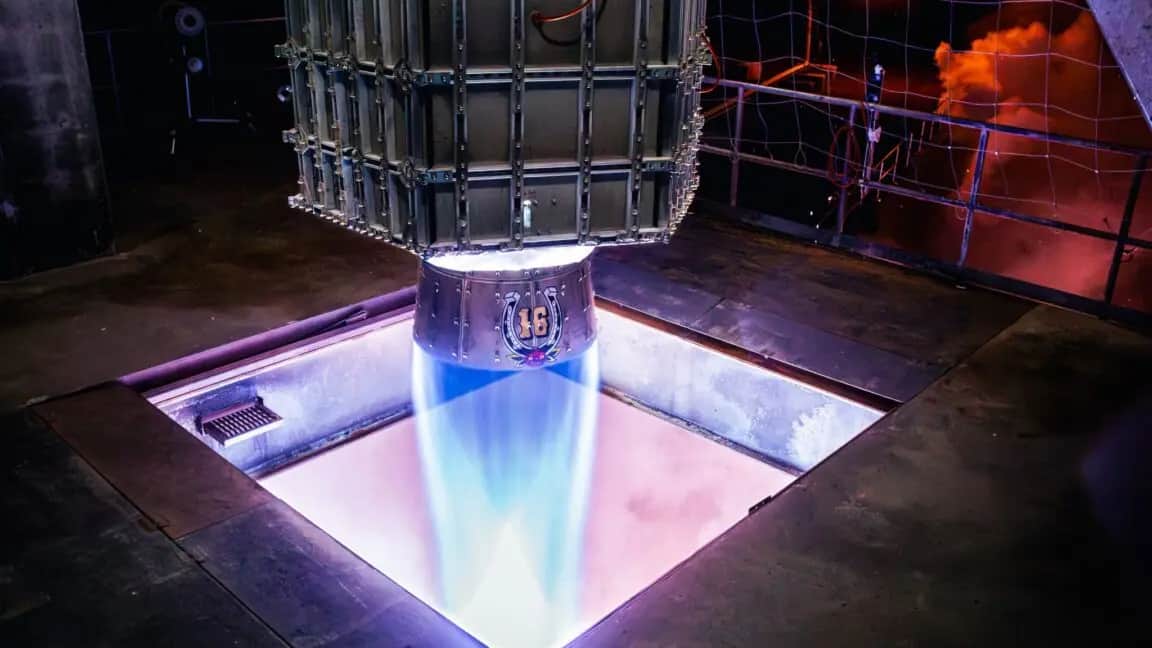
The Pentagon’s Office of Strategic Capital has announced conditional loans of $150 million each to Stoke Space and Rocket Lab. The funds are intended to help develop launch infrastructure and rockets needed for future military launches; both loans remain subject to a number of reviews and requirements.
According to Ars Technica, decisions involving the two companies were announced over two weeks: Stoke Space received a conditional loan offer on October 26, and the military announced another $150 million for Rocket Lab on Tuesday. This is the first significant support for launch companies from the Office of Strategic Capital, established in 2022 to direct capital toward technologies important to national security.
Reported by arstechnica.com.
The Stoke Space loan is intended to fund construction of a second launch pad at the US Space Force base at Cape Canaveral, Florida. It is to support flights of Nova Block 2, the next version of the company’s rocket. Ars Technica notes that the fully reusable Nova Pathfinder is set to debut next year. Jordan Sebold, the Office of Strategic Capital’s senior managing director for investments, explained that additional launch infrastructure is intended to increase the overall capacity and resilience of the commercial space industry.
Rocket Lab’s funding will support preparations for more frequent flights of Neutron, a partially reusable rocket whose first launch the company also plans for next year. According to the Office of Strategic Capital, the loan is intended to help accelerate rocket production and preparation, expand the fleet of seagoing vessels and equipment for recovering and transporting Neutron, and upgrade manufacturing of composite structures and engines. The funds are also intended to support infrastructure that will shorten the time between launches once the rocket enters regular operations.
The funds have not yet been provided unconditionally: the Office of Strategic Capital said both loans are contingent on meeting financial, legal, technical, investment and other requirements, as well as completing due diligence. Rocket Lab CFO Adam Spice called the loan terms “very attractive” and said the loan would give the company additional capital to scale key areas, including Neutron.
The support is part of the Pentagon’s longstanding policy of ensuring the military has access to space. Since the 1990s, the department has financially supported at least two US rocket programs for launching national security satellites. SpaceX’s Falcon family and United Launch Alliance’s Vulcan rocket are currently the Space Force’s primary providers. Vulcan has been grounded twice in the past two years because of problems with its solid rocket boosters; this forced the Space Force to move several missions to SpaceX.
At the same time, demand for launches is growing. Space Systems Command projects that the military will need up to 249 medium- and heavy-class launches by the early 2030s—more than double what the command expected just two years earlier. Alongside SpaceX and ULA, Blue Origin, Rocket Lab, Stoke Space, Relativity Space and Impulse Space have been admitted to compete for some of these contracts. Their readiness varies: according to Ars Technica, Blue Origin is the only one of the listed companies to have already flown a rocket that could meet Space Force requirements.
The need for alternative providers is also linked to changes in SpaceX’s plans. The company has stopped accepting commercial orders for Falcon 9 after 2028, focusing instead on Starship. Government Falcon flights are expected to continue longer: the contract allows the Space Force to order Falcon 9 and Falcon Heavy through 2029, while the launches themselves may take place through 2033. Starship could potentially launch national security payloads, but that remains a prospect; in the near term, the company plans to use it for its own Starlink satellites and Starmind orbital data centers.
Against this backdrop of demand, Rocket Lab said it is raising the price of a Neutron launch from $55 million to $70 million. The company attributed the increase to a rise in bookings for a rocket that has yet to prove itself in flight. Rocket Lab said its backlog includes 117 launches under contract, including launches for Neutron and the smaller Electron rocket. Separately, the Office of Strategic Capital provided a $150 million loan to LeoLabs, which manufactures and deploys commercial radars for tracking satellites.