

NASA Seeks Proposals to Extend the Hubble Telescope’s Operations
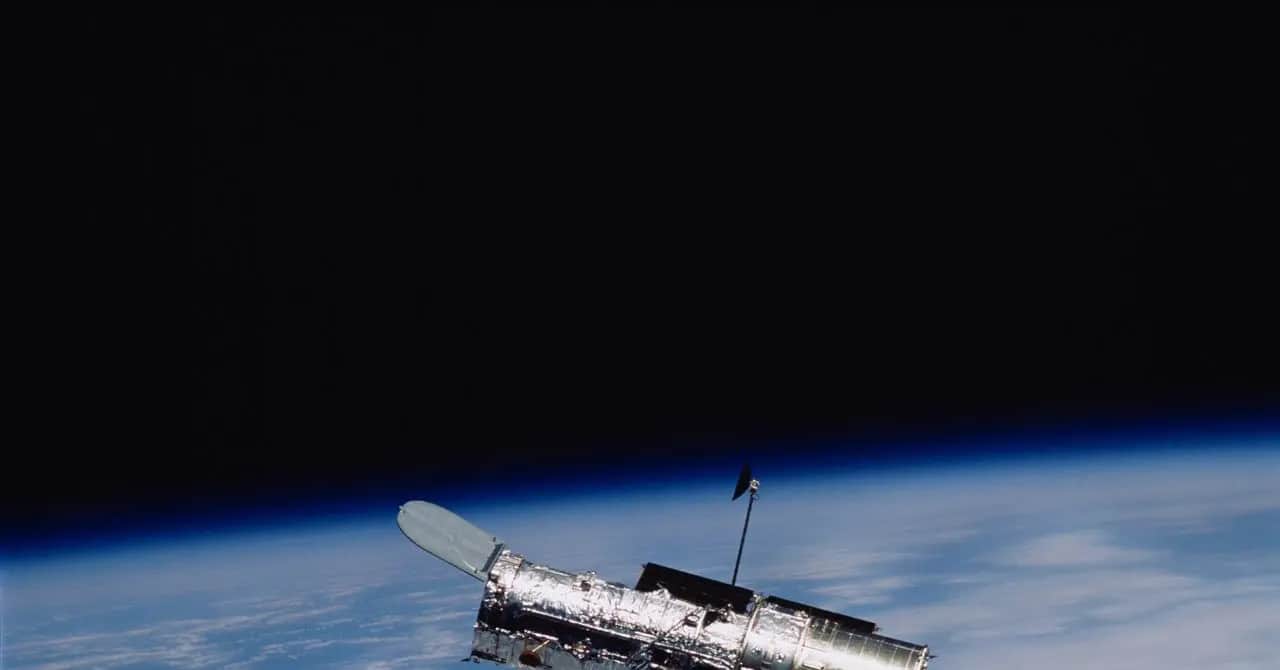
NASA has asked the private sector for proposals to service the Hubble Space Telescope. The agency is considering options including raising its orbit, upgrading the telescope or bringing its flight to a controlled end.
According to WIRED, NASA’s request seeks options for so-called in-space servicing. Companies can propose ways to raise the telescope to a higher orbit to extend its operations, or to safely and controllably deorbit or dispose of it while it is still in space. The agency is also willing to consider upgrades that would improve Hubble’s capabilities for the rest of its service life.
Reported by wired.com.
The search for a solution is prompted by the spacecraft’s declining orbit. According to WIRED, atmospheric drag is gradually slowing Hubble, and it has no propulsion system of its own to correct its orbit. According to NASA’s analysis, if no action is taken, the telescope will likely enter Earth’s atmosphere in 2033 or 2034. NASA estimates that a mission to raise its orbit needs to take place by 2032; a more stable, higher orbit could provide several more years of observations.
Niki Fox, associate administrator of NASA’s Science Mission Directorate, said the agency wants to explore a broad range of ways to raise Hubble’s orbit while it develops its next flagship mission. NASA Administrator Jared Isaacman also stressed the need to consider practical, cost-effective opportunities to extend the operations of a spacecraft already in orbit, WIRED reported.
This is not NASA’s first attempt to enlist private-sector resources to find a way to change Hubble’s orbit. In 2022, the agency signed an unfunded partnership agreement with SpaceX to study whether a Dragon spacecraft could be used to move the telescope to a more stable orbit. As WIRED notes, the study was intended to assess commercial feasibility and did not mean that NASA planned to carry out or fund the mission itself.
Hubble was launched in 1990; its design allowed astronauts to repair and upgrade it in orbit. There have been five servicing missions in total. The last shuttle mission was canceled after the Columbia disaster in 2003, but in 2009 a crew nevertheless carried out work, including replacing a battery, to extend the telescope’s service life.
The declining orbit is not the spacecraft’s only problem. In June 2024, NASA announced that it was switching to a mode in which the telescope’s orientation is determined by one of its six gyroscopes. At the time, three gyroscopes were working; one had begun returning anomalous data, and another functioning unit was kept in reserve for future use.