

Metalenz acquires PxE: HoloCoder could increase camera light sensitivity
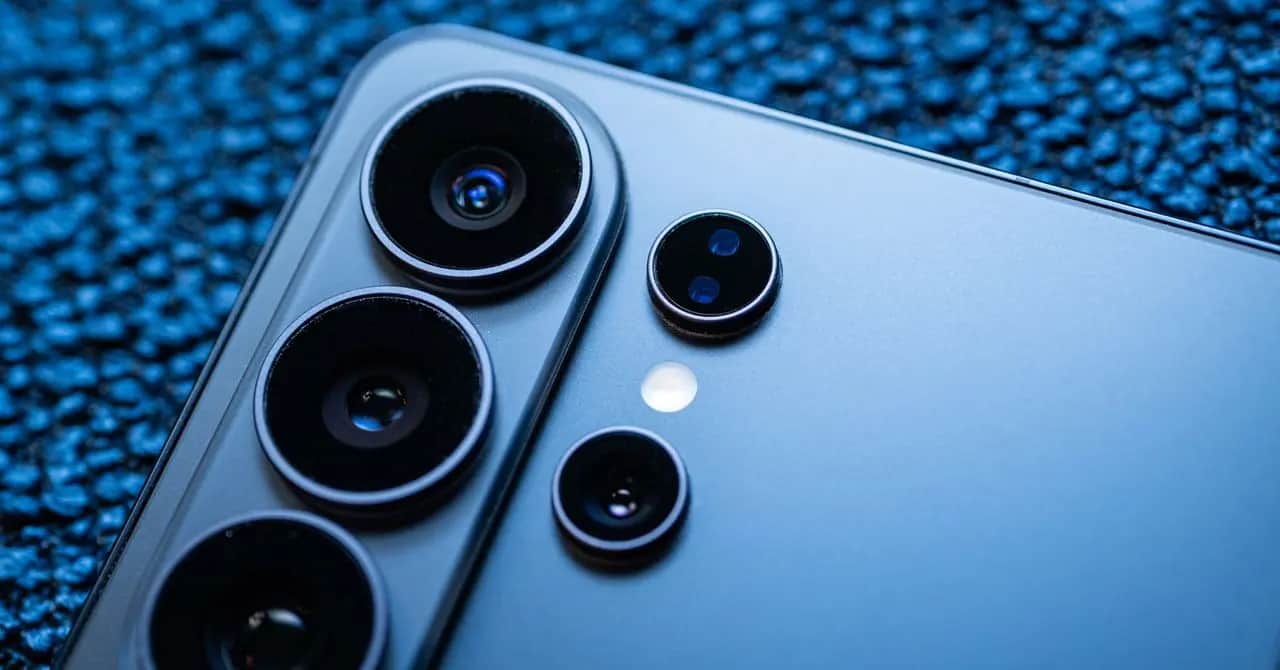
Metalenz has acquired Israeli startup PxE Holographic Imaging, developer of the HoloCoder optical layer. According to WIRED, the technology directs light to the sensor instead of absorbing it, allowing the sensor to collect up to 2.5 times more light.
HoloCoder is a microscopic structure placed directly above an image sensor. It directs light waves to pixels using diffraction, while a traditional color filter absorbs some of the light. According to WIRED, the Bayer filter, which produces a color image, loses about 60% of light before it reaches the sensor.
Reported by wired.com.
The claimed ability to collect more light could be useful for photos and video in low-light conditions. WIRED also describes a possible advantage in high-contrast scenes—for example, taking a selfie in front of a bright window: the sensor could better reproduce light and dark areas without losing detail in highlights and shadows. These are expected capabilities of the technology, not the results of testing a finished camera.
According to WIRED, HoloCoder could also collect depth information at the same time. Smartphones currently determine depth using additional cameras, separate sensors, or algorithms that estimate the distance to an object, including for portrait mode. Combining light sensitivity and depth data in a single layer could simplify the electronics on the back of a smartphone, save space, and reduce the amount of data processing.
Metalenz has experience in a related field: the company publicly launched in 2021 and has been developing the commercialization of metasurfaces—flat optical systems with nanostructures that control light. According to WIRED, Metalenz has already shipped more than 300 million such optical components for consumer devices. Details of the PxE acquisition were not disclosed.
Metalenz CEO and co-founder Rob Devlin told WIRED that PxE’s approach is similar to his company’s: microstructures directly on the sensor are intended to reveal light data that ordinary cameras lose. He said Metalenz has already replicated the technology in a laboratory using its own metasurface optical components. HoloCoder, however, works as diffractive optics, not as a metasurface.
At the time of WIRED’s publication, HoloCoder was not yet on the market. Devlin believes the technology could be integrated into Metalenz’s platform: the company already has a supply chain, an image-processing pipeline, and machine-learning algorithms for working with new data. Initially, he said, HoloCoder and metasurface optics will be separate products for different markets; he sees combining them as a possibility in the long term.
Devlin expects HoloCoder could appear in consumer electronics in late 2027 or early 2028. Separately, Metalenz is working with Qualcomm on Polar ID, a biometric authentication system for Android that uses polarization data. According to WIRED, it is expected to appear in consumer devices in late 2027.
Metalenz also sees potential applications beyond smartphones, including in autonomous robots and transportation. Devlin believes a compact system with a single sensor could collect spatial data, reducing the need for multiple sensors and the computing required to align their data. However, optoelectronics researcher Arka Majumdar, quoted by WIRED, is skeptical about the prospects for revolutionary changes in robotics and self-driving cars: in transportation, he said, the limiting factor may not be image quality or low light, but the computing power needed to make rapid decisions. He nevertheless agrees that removing the color filter could improve smartphone photography in the dark.