

Researchers believe Iron Age woman from Northern Ireland was beheaded with two blows
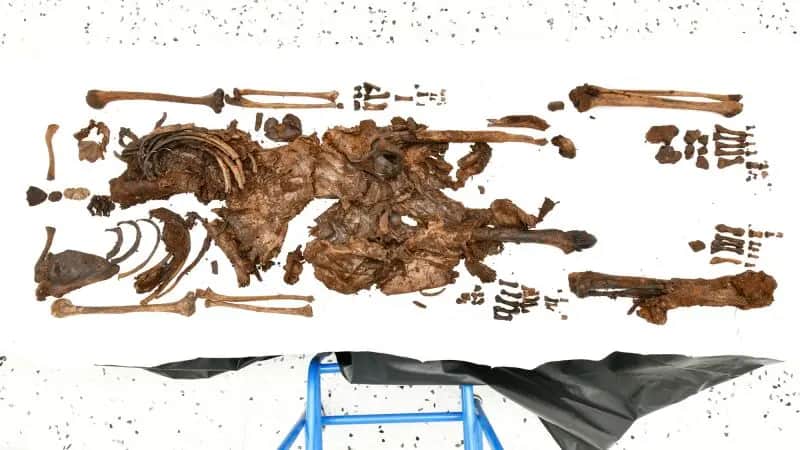
Analysis of the remains of a woman found without her skull in a Northern Ireland bog points to possible decapitation with two blows. Participants in a public inquiry at the Ulster Museum suggested that her death may have been ritualistic, but no definitive conclusion has been reached.
The woman, known as Ballymacombs More Woman, was found in 2023 in a village northwest of Belfast. Her remains are about two thousand years old and date to the Iron Age. Most of the body was well preserved, but the skull was missing. CNN reports that the cool, acidic conditions of northern European bogs, where a process similar to mummification occurs, helped preserve the remains naturally.
Reported by CNN.
Information about the woman was presented at a public event at the Ulster Museum in Belfast, organized on the model of a modern forensic inquiry. Archaeologists and specialists in biology, textiles and environmental science took part; the event was chaired by one of Northern Ireland’s senior coroners. The researchers discussed evidence about both her life and the circumstances of her death.
Archaeologist Eileen Murphy of Queen’s University Belfast examined marks on a vertebra in the upper neck. Her analysis points to a possible sharp-force injury: two blows appear to have been delivered from the right and may have completely severed the head. This is a conclusion based on the skeletal remains, not an established eyewitness account.
The body’s position may add to this picture. In Murphy’s assessment, the bent knees and the position of the left foot and toes suggest that the woman may have been kneeling in her final moments. The position of the torso is consistent with her falling backward after decapitation and the body turning; the researcher believes the fall occurred at the site of the killing.
The inquiry heard evidence from specialists about a possible ritual aspect to the death. Eamonn Kelly, a former keeper of Irish antiquities, noted that closer study of early mythological material from the period could shed light on the question. Archaeologist Melanie Giles, who researches the Iron Age and bog bodies, also suggested that the swift death may have been a sacrifice or the killing of a sacred messenger to the gods. At the same time, she said it was not known whether the woman was being punished or was an innocent captive, hostage or scapegoat.
A ritual explanation remains a hypothesis. According to CNN, some specialists doubt that there is enough reliable archaeological evidence to confidently identify ritual killing as the cause of death. Roy van Beek of Wageningen University in the Netherlands, who did not take part in the inquiry, said it was archaeologically difficult to distinguish ritual violence from other kinds of violence. He also called speculative the link between bog bodies and power and sovereignty previously proposed by some researchers.
Giles stressed that formal burials in Iron Age Ireland were extremely rare, making remains like these important to understanding the lives of people at the time. Van Beek called the find an important opportunity to apply modern methods to a body discovered relatively recently and to study the find site in detail. Coroner Joe McCrisken said the inquiry was also intended to restore historical memory of a woman who became a victim of violence.