

Fox News columnist urges US to renew defense along the lines of Reagan’s approach
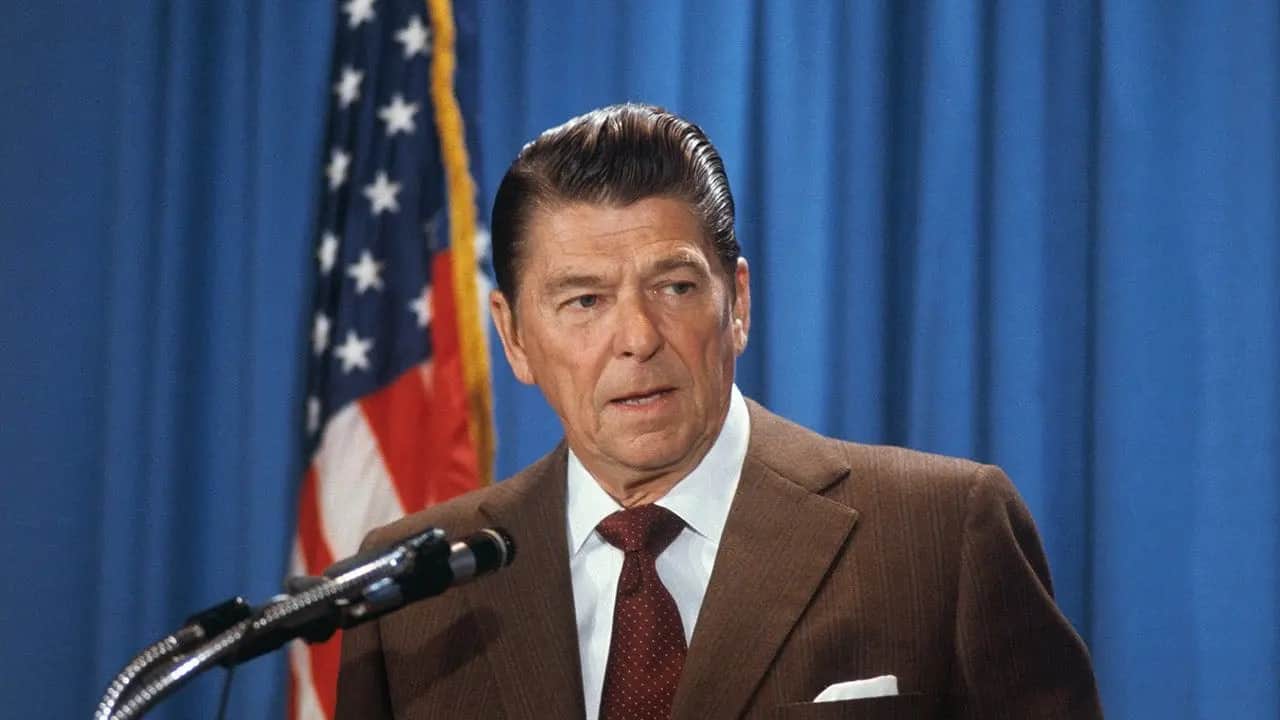
In a Fox News column, Hugh Hewitt argues that the major defense buildup under President Ronald Reagan helped the United States achieve its Cold War goal and preserve peace between superpowers. He says the current arsenal needs constant renewal and that its funding requires political support.
Hewitt links the history of the American defense buildup to the confrontation with the Soviet Union. In his account, since the Cuban Missile Crisis, Moscow had sought nuclear superiority over the United States and its allies, and by the time Reagan took office it had come close to achieving de facto dominance in nuclear arsenals. After defeating then-President Jimmy Carter, Reagan began a major strengthening of the defense.
Reported by foxnews.com.
This period and the political work behind it are described in Roger Zakheim’s new book, Peace Through Strength: How Reagan’s Military Buildup Won the Cold War. As Hewitt recounts it, the book describes how Reagan’s team developed defense policy and persuaded the public and Congress to support it. Zakheim heads the Ronald Reagan Institute; previously, he worked as a lawyer at Covington & Burling and on the House Armed Services Committee.
Hewitt describes the defense buildup as a campaign that lasted more than ten years. It began after President Gerald Ford’s defeat in the 1976 election and was tied to Reagan’s preparation for the presidency and his time in the White House. The goal Hewitt attributes to Reagan was to have an arsenal sufficient to deter adversaries and preserve peace between superpowers.
The plan was complex and expensive, and its implementation, the author says, depended on support within the administration and Congress. Among the members of Reagan’s team, Hewitt names Defense Secretary Caspar Weinberger and his deputy, Frank Carlucci; in the Senate, he names Republican John Tower and Democrat Sam Nunn. The process also had setbacks, including the battle over the MX missile.
At the same time, Hewitt counts the deployment of Pershing II missiles in Europe and initial commitments to the Strategic Defense Initiative among the successes. He writes that Reagan and his successor, George H. W. Bush, continued the course, while the development of the free market and intellectual capital helped produce its results.
However, the arsenal built under Reagan and George H. W. Bush will not last indefinitely, the author stresses. Weapons wear out, so defense capabilities need to be regularly renewed and replenished. As an example, Hewitt cites nuclear-powered aircraft carriers: Congress can set a requirement to maintain a fleet of 11 such ships, but it cannot extend the service life of their reactors beyond their designed lifespan or speed up their replacement.
In discussing the cost of renewal, the author also compares US debt: according to him, it was less than a trillion dollars in 1981 and now exceeds 40 trillion. Hewitt writes that Donald Trump has already secured funding to begin renewing national security infrastructure, but further restoration remains uncertain because a change in the congressional majority is expected in January.
The author predicts a political battle over continuing defense spending. In his assessment, among new Democrats in Congress, there is a prevailing desire to direct more money to social programs and less to defense; at the same time, he believes there is currently no Democratic senator who could play Sam Nunn’s role in bipartisan cooperation. Hewitt offers these assessments against the backdrop of Congress having already discussed additional funding for the Pentagon.
Hewitt urges a Republican Congress to preserve the start of rearmament and presidential candidates from both parties to make defense a central theme of future campaigns. He recommends Zakheim’s book, among others, to those considering running in the 2028 presidential election. This is the view of a Fox News columnist, not a separate report on an adopted decision regarding defense spending.