

European Commission more visible in EU diplomacy in the Middle East as Kallas’ channel to Israel remains closed
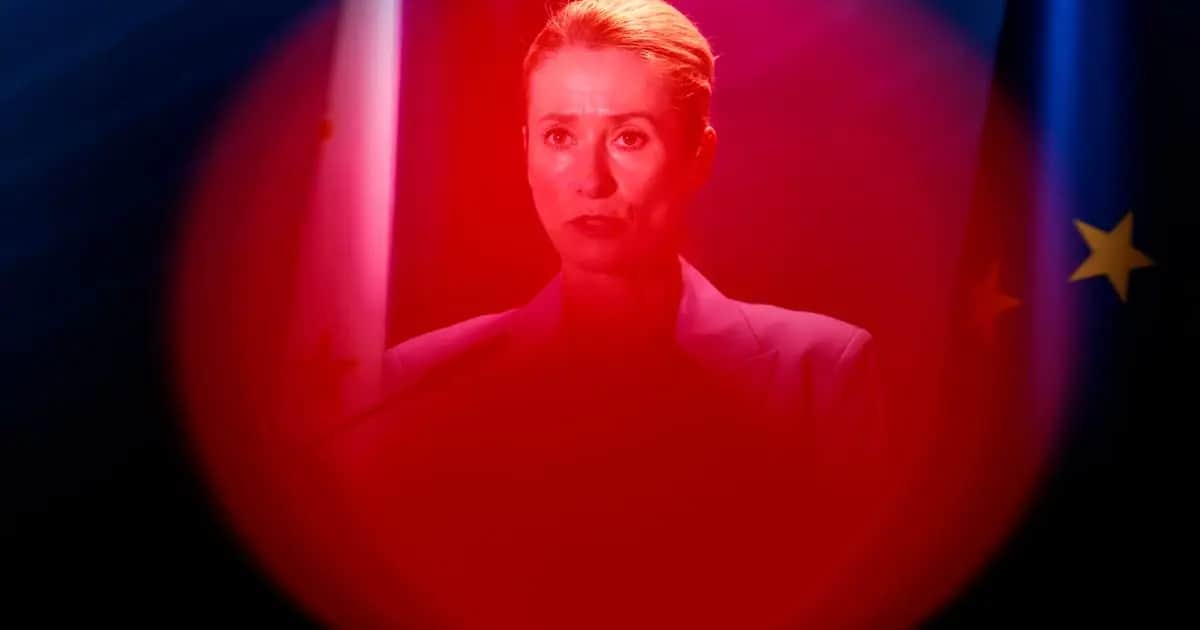
The European Commission is taking on a more prominent role in EU diplomacy in the Middle East, while Israeli Foreign Minister Gideon Sa’ar has not resumed direct contact with EU High Representative Kaja Kallas. POLITICO reports on the division of diplomatic contacts and responsibilities within the EU.
This week’s schedule, according to the publication, clearly showed the European Commission’s activity in the region: its president, Ursula von der Leyen, and Commissioner for the Mediterranean Dubravka Šuica are travelling to Syria and Jordan. Meanwhile, Kallas is hosting a Mediterranean security forum in Brussels.
Reported by politico.eu.
Šuica has become a regular point of contact for Israel and the United States. This year, she has met or spoken with Sa’ar at least four times. She previously told POLITICO that delivering aid to Gaza requires the approval of the Israeli authorities, so it is important to keep channels of communication open. She said she coordinates her Middle East missions with Kallas.
Kallas’ direct channel to Sa’ar has been closed since a public dispute in June. It followed reports that Kallas had allegedly compared Israel’s treatment of Palestinians to South Africa during apartheid. Sa’ar said he would end contact until she withdrew what he called “blood libel.” Kallas, however, did not comment on reports of the analogy, and her allies did not confirm whether she had used it.
Sa’ar’s spokesperson, Michal Maayan, told POLITICO that the decision not to contact Kallas remains in force and applies only to the EU’s top diplomat. She said Israel continues to engage constructively with EU institutions and its member states, and that the minister maintains close ties with the foreign ministers of EU countries and other European officials.
Before the dispute, Sa’ar and Kallas spoke often, sometimes exchanging WhatsApp messages several times a day, a person familiar with their communication said. Kallas’ aides also point to a humanitarian arrangement brokered with her help to facilitate aid deliveries. Some EU diplomats, however, believe the breakdown in contact complicates the Union’s diplomacy: in their view, it is impossible to address issues related to Gaza without speaking to Israel.
The EU’s institutional roles in foreign policy are divided between Kallas and the European External Action Service, which handle political and security issues, and the European Commission, which has many tools in the areas of aid, development and the economy. Responsibilities often overlap, however: Kallas and Šuica, for example, both took part in the EU’s political dialogue with Syria, while von der Leyen attended the EU-Jordan summit.
Two EU officials familiar with the situation denied that Kallas and her diplomatic service were being sidelined on Middle East policy, saying she works closely with Šuica. One official called Israel’s choice of interlocutors a matter of personal preference and suggested that Sa’ar’s decision to bypass Kallas was personal.
Tensions in the relationship were also affected by von der Leyen’s proposals in 2025 to partially suspend the EU-Israel Association Agreement and some research funding for Israeli universities. POLITICO reports that neither proposal secured sufficient support among EU capitals, but both contributed to a deterioration in relations. A European Commission spokesperson, meanwhile, said Kallas was open to dialogue and ready to work with Israel’s next government; he said that at Monday’s meeting of foreign ministers, she discussed the way forward in EU-Israel relations.
Despite the closed channel between Sa’ar and Kallas, Israel continues to be in contact with experts at the European External Action Service, including EU Special Representative for the Middle East Peace Process Christophe Bigot, an aide told POLITICO. The restriction therefore concerns contact with a specific official, not a suspension of Israel’s engagement with all EU bodies.