

China is building an 800 MW AI data center campus with wind farms and an 800 V system
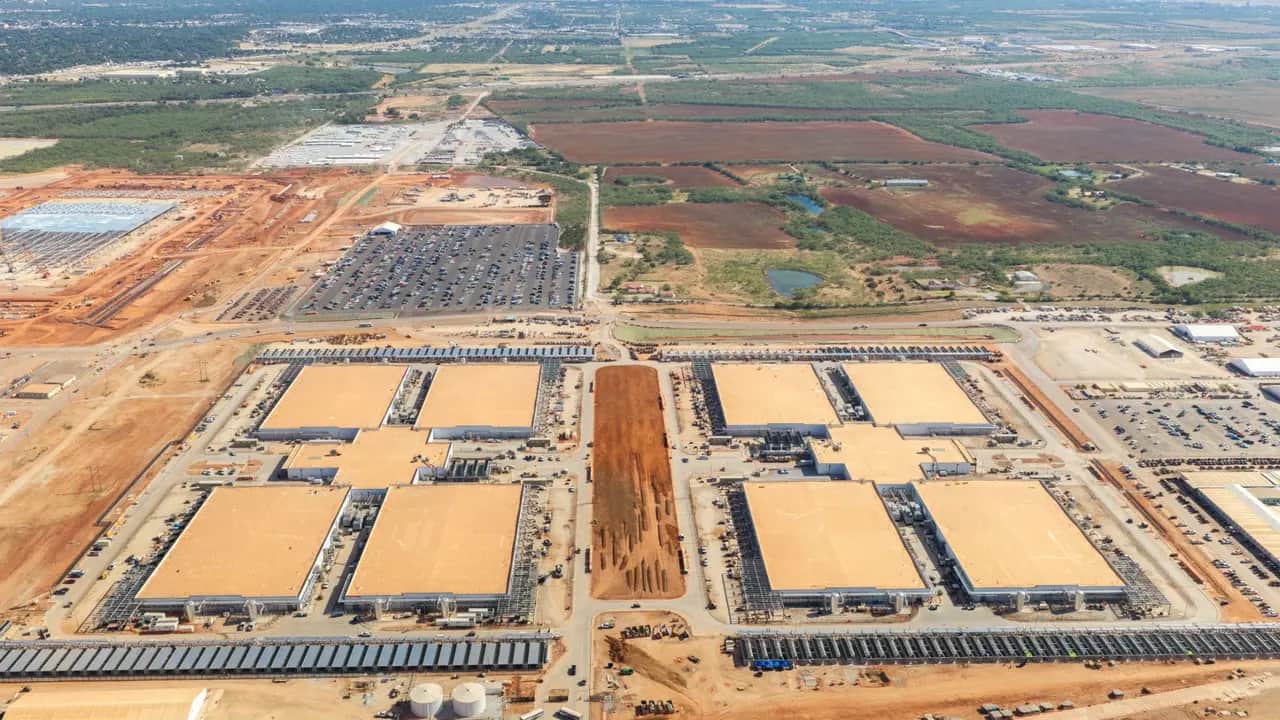
Envision is building the Galaxy campus in Inner Mongolia, designed for 800 MW of IT capacity. According to Tom’s Hardware, citing research by SemiAnalysis, the project combines data centers with dedicated wind farms, batteries and an 800 V direct-current power system for servers.
Galaxy is located in Ulanqab and is intended for two unnamed internet companies. The campus is being built in four phases; the completed infrastructure is expected to provide up to 800 MW of IT capacity by the end of 2027. This would bring the project’s planned scale close to that of the Stargate campus in Abilene, Texas, which the article lists as having approximately 820 MW of critical IT capacity.
Reported by tomshardware.com.
SemiAnalysis researchers visited the site in September. By then, Envision had already built the first 120 MW in less than a year. They estimated that this part of the project cost about one-fifth as much as comparable US projects. This is the researchers’ estimate, as reported by Tom’s Hardware, not a project budget disclosed by the company.
A separate challenge for a complex of this kind is supplying servers with large amounts of electricity. Envision is developing dedicated power generation and storage infrastructure for Galaxy rather than relying entirely on the local grid. The first two phases are expected to have a 240 MW load, and the company plans to meet more than 60% of their electricity needs with wind generation.
Two wind farms, located approximately 80 kilometers apart, have a combined capacity of 420 MW. Since turbines do not generate electricity at full capacity all the time, Envision is adding battery systems with four-hour storage. The article does not specify how generation will be divided between the campus and other consumers.
At the site, the researchers also saw another feature of the power system: in one 5 MW hall, solid-state transformers convert grid electricity from 10 kV alternating current directly to 800 V direct current for server racks. This setup avoids several intermediate conversion stages used in traditional data centers.
In the researchers’ view, fewer intermediate components could reduce equipment needs and energy losses. However, SemiAnalysis did not provide a measured efficiency gain for the pilot installation. The 5 MW hall is only a small part of the complex, but the system is already operating at an active site; Envision plans to use it more widely in later construction phases.
Galaxy is part of Envision’s broader plans in Inner Mongolia, which could reach 3 GW, according to SemiAnalysis, while the rest of the campus is still under construction. In the Chahar High-Tech Zone, nearly 30 thousand construction workers are working on 22 data center projects, according to a local report.
Alibaba, Huawei and ByteDance are also expanding infrastructure in the region. The article cites relatively cheap electricity, available land and substantial wind resources among the area’s advantages. However, building data centers and supplying them with electricity does not in itself mean that the corresponding computing capacity is already available for AI: access to advanced accelerators remains a separate constraint for China amid US export restrictions.