

CATL expands battery-swapping network to ease range anxiety over sodium-ion cars
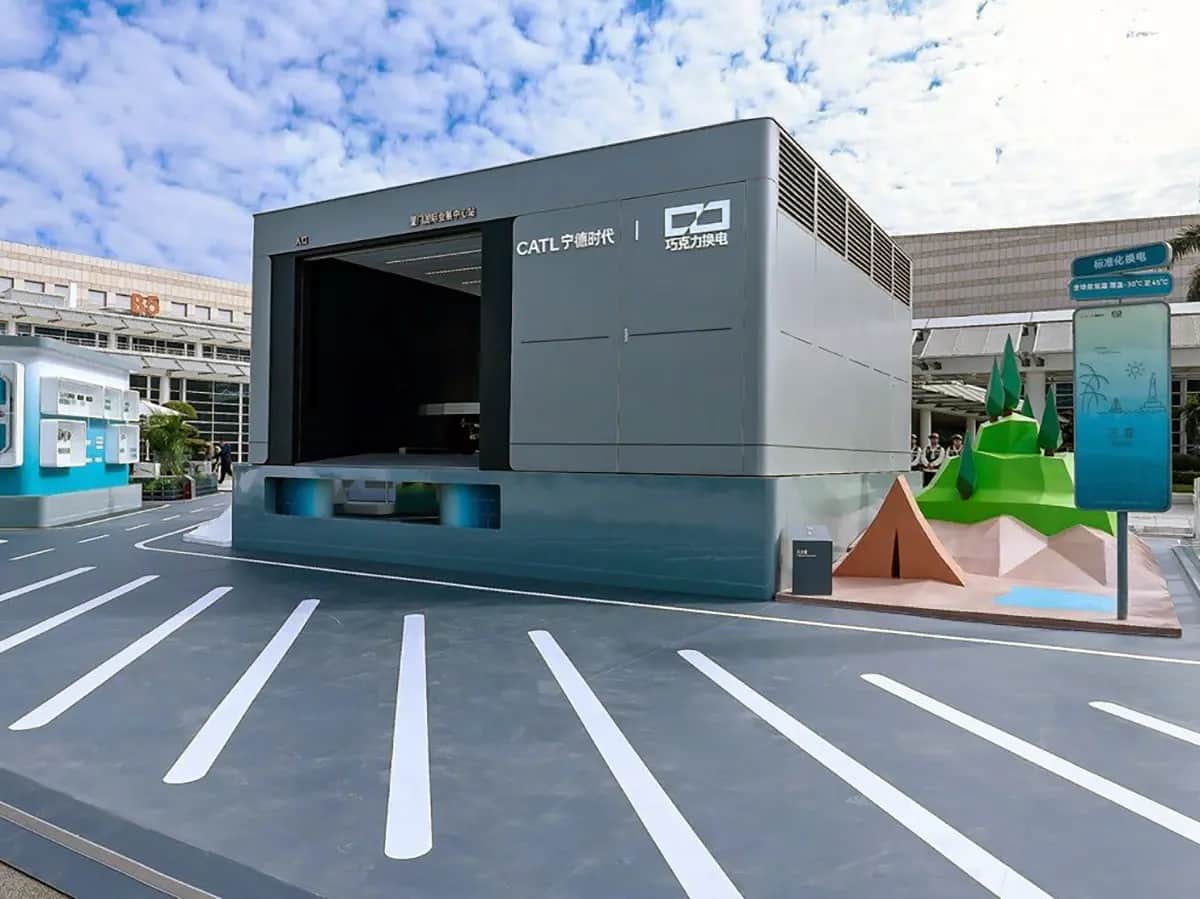
CATL is pairing sodium-ion batteries with a network of swapping stations, aiming to offset the batteries’ lower energy density and drivers’ range concerns. Notebookcheck reports this, citing remarks by company chairman Robin Zeng at a Benchmark Mineral Intelligence event in Shanghai.
According to Zeng, sodium-ion batteries are already sufficient for daily city driving. Swapping stations are intended to offer a solution for longer weekend trips, so drivers will not have to wait for the battery to charge. CATL is building the Choco network itself and leasing the batteries to customers. Zeng also stressed that the company needs to place more stations in cities and along highways.
Reported by Notebookcheck.
Notebookcheck reports that Zeng estimates current swapping-station coverage at around 200 Chinese cities. Separately, the outlet gives the Choco-Swap network’s figure for December 2025: 1020 stations in 45 cities. CATL aims to increase the number of passenger-car swapping stations nationwide to more than 3000 by the end of 2026.
The reason the manufacturer is betting on battery swapping is the lower energy density of sodium-ion cells, which limits driving range. In February, CATL and Changan unveiled a car with these batteries: their energy density reaches 175 Wh/kg, and the stated driving range exceeds 400 km. According to CATL, the cells also retain more than 90% of their capacity at −40 °C.
The idea is that a depleted battery could be replaced in just a few minutes. This is expected to make the lower energy density less significant, help sodium-ion cars become more widespread, and reduce battery production costs. CATL’s energy services subsidiary has already said it plans to begin deploying Naxtra batteries in its swapping network this year.
The technology’s use remains limited for now: CATL forecasts that its sodium-ion batteries will be fitted in 10–20 thousand electric vehicles in 2026. At the same time, the company announced a $735 million investment in manufacturing capacity of 40 GWh. Notebookcheck links these plans to expectations that demand will grow alongside the swapping-station network.