

AI Centers in Central Asia: Ambitious Plans and Questions About Energy Supply
Central Asian countries are advancing projects for data centers and computing capacity for artificial intelligence. At the same time, critics are raising questions about funding sources, electricity and the transparency of deals, Mezhа reports, citing Radio Liberty.
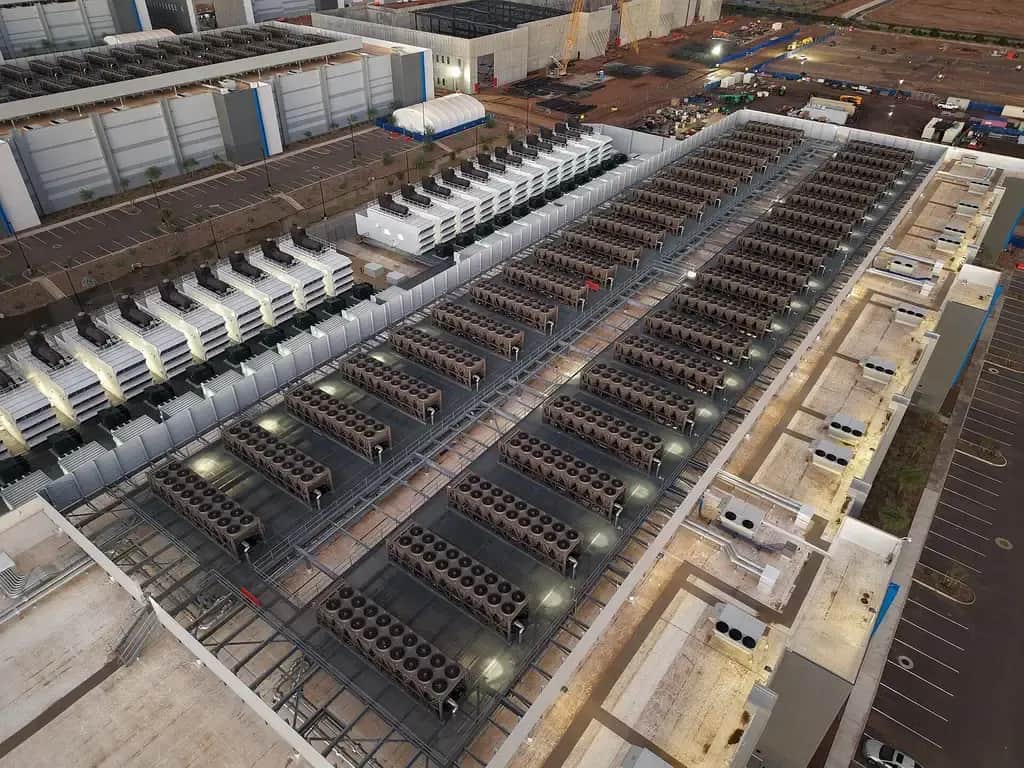
The region’s largest project of its kind is said to be Data Center Valley in Kazakhstan. Nvidia, US infrastructure company Firebird and Kazakh operator Kazakhtelecom are involved. The initial phase is valued at $10 billion. Supporters of the initiative believe it could make Kazakhstan a major exporter of AI computing capacity.
Reported by Mezha.
During a visit to Astana in October, then-Nvidia CEO Jensen Huang outlined the possible scale of expansion. He said the initial expansion could eventually provide 1 GW of capacity for servers and equipment, with a long-term target of 5 GW. Huang also said Kazakhstan could turn its energy resources into computing capacity and export it.
Marat Beksultanov, a geospatial analyst and CEO of GeoBox, questioned the project’s financial model. He said most of the funding was being provided by the Kazakh government, with little or no private money involved. He also noted that funds were being allocated before anyone had committed to using the center. As a result, Beksultanov said, almost nothing is yet known about its future customers.
Electricity to power the center is another issue. Data Center Valley is located near Ekibastuz GRES-1, a coal-fired power plant. Beksultanov believes this proximity could make it harder to attract European customers: many companies must report the carbon footprint of the services they purchase, including cloud computing. In his view, the project needs clean electricity to sell its services in Europe, and it does not have it.
According to Beksultanov, Kazakhstan generated 123.1 billion kWh of electricity in 2025 and used 124.6 billion. The shortfall was covered by imports from Russia. Against this backdrop, the government promised Data Center Valley a fixed low electricity price for 20 years, while local businesses pay significantly more. Critics fear that a major new consumer will put a greater strain on the grid and increase the risk of outages across the country.
The transparency of the arrangements is another cause for concern. Beksultanov said the public had not been shown the electricity and lease agreements with Firebird, and that the source of the electricity discount had not been disclosed. He said this leaves unanswered the question of who is paying for the project’s key terms.
Other countries in the region are also trying to attract investment in data centers. Under its Digital Uzbekistan 2030 strategy, Uzbekistan is offering tax and customs benefits through 2040 for investments that meet established criteria. Saudi company DataVolt is building a 12 MW liquid-cooled facility in Tashkent. In subsequent phases, it plans to invest about $3 billion, potentially allowing capacity to grow to 500 MW. DataVolt has named Google, Microsoft, Meta and Amazon as companies it hopes to attract.
In October, Tajikistan announced plans to create a regional AI innovation center with support from Nvidia’s Global AI Nations program. Kyrgyzstan is seeking investment from Chinese companies, including Inspur, Huawei and ZTE. Separately, StarOcean Investment signed an agreement to establish an energy-intensive industrial park for data centers and AI computing on a 200-hectare site in the Naryn Free Economic Zone.
Turkmenistan is also seeking data center projects. Deputy Energy Minister Serdar Saparov reported preliminary talks with international companies, while Singapore-based Bitdeer Technologies Group presented a proposal to use the country’s energy resources for computing capacity, including AI. However, a former Turkmen government official who spoke to Radio Liberty anonymously due to security risks called the project announcements a PR campaign and questioned whether the country has the necessary infrastructure.
The former official also pointed to practical constraints. Because of high temperatures during a significant part of the year, cooling costs would rise, he said. Water-saving technologies exist, but make data center operations more expensive. He also warned that the power grid is deteriorating and requires “huge investments” to upgrade, citing a recent large-scale power outage that affected the region.
Resource consumption is also being debated beyond Central Asia: opposition to data centers is growing in the United States and Europe over their impact on electricity bills, grid capacity and significant water use. In a recent policy brief, the United Nations Economic Commission for Europe warned that similar challenges could arise in Central Asia. The region already suffers from water shortages, while data centers require substantial amounts of both electricity and water.