

Xi Jinping calls Taiwan’s reunification with China inevitable and says Beijing is pursuing peace
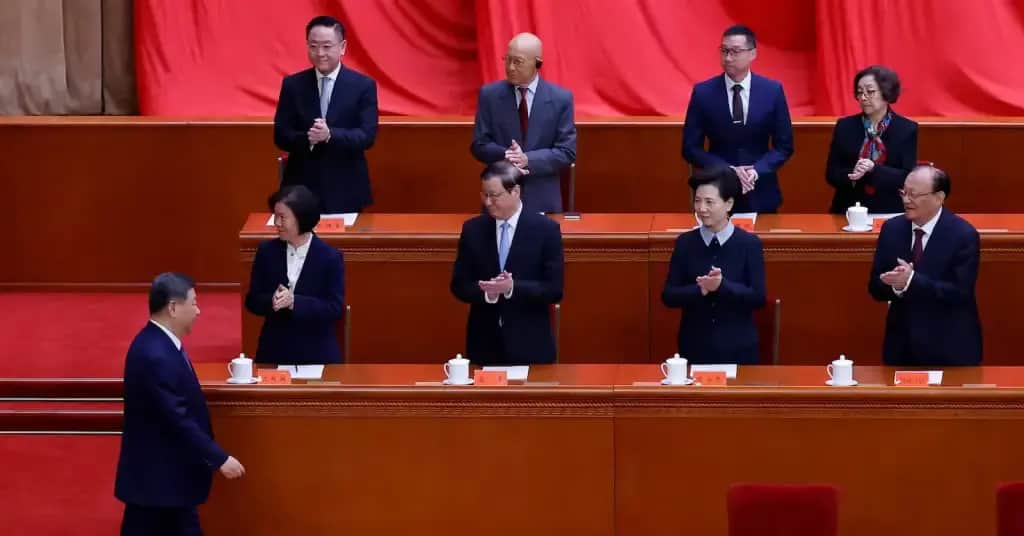
Chinese President Xi Jinping called Taiwan’s reunification with mainland China inevitable and voiced support for a peaceful path. According to Mezha, he did not mention the use of force; the speech came amid Chinese military activity near the island.
Xi spoke in Beijing to mark the 160th anniversary of Sun Yat-sen’s birth. He called resolving the Taiwan issue the Chinese Communist Party’s “unshakable historical mission.” According to Mezha, the Chinese leader said historical progress could not be stopped and that the motherland must be fully reunified.
Reported by Mezha.
Xi reaffirmed Beijing’s commitment to peaceful reunification and the “one country, two systems” model. He also said China was ready for dialogue with Taiwan on the basis of the “one China” principle, and called on people on both sides of the strait to oppose supporters of the island’s independence and back the peaceful development of relations.
Beijing considers democratically governed Taiwan part of its territory, but Taipei rejects the claim. China has repeatedly offered the island the “one country, two systems” model, which, according to Mezha, is supported by none of Taiwan’s leading political parties. The island’s government called Xi’s remarks a reiteration of Beijing’s previous position. Liang Wen-chieh, spokesperson for Taiwan’s Mainland Affairs Council, said the wording about reunification differed little from what had been said before.
Although Xi did not mention the possibility of using force, China has not ruled out that option, Mezha notes. Taiwan’s Ministry of National Defense said it detected 29 Chinese military aircraft near the island on Thursday, including J-16 fighter jets and drones. According to the ministry, they carried out combat readiness patrols alongside Chinese naval vessels.
The speech was dedicated to Sun Yat-sen, who took part in the 1911 revolution. It ended centuries of rule by emperors and empresses and led to the establishment of the Republic of China. Beijing calls Sun Yat-sen a national hero and patriot, as well as a forerunner of the 1949 revolution. After the Communists’ victory, the Republic of China government moved to Taiwan.
Sun Yat-sen’s legacy is also important in Taiwan: he is officially regarded there as the “father of the nation,” and his portrait hangs in the presidential office. At the same time, his political doctrine, the “Three Principles of the People,” is no longer a compulsory school subject. Last month, the island’s authorities urged residents not to attend China’s events marking the anniversary of Sun Yat-sen’s birth, accusing Beijing of distorting his views and legacy.
Taiwanese President Lai Ching-te and his Democratic Progressive Party emphasize the island’s distinct identity. Beijing calls Lai a supporter of independence and refuses to negotiate with him. The Taiwanese president himself says that only the island’s residents can decide its future.
According to Mezha, Xi’s statement came ahead of the APEC summit in Shenzhen. He was due to meet US President Donald Trump there again next week. Important local elections were also due to take place in Taiwan in less than three weeks.