

Why Ukrainians stay near the front line: adapting to danger, fear of moving and hope for peace
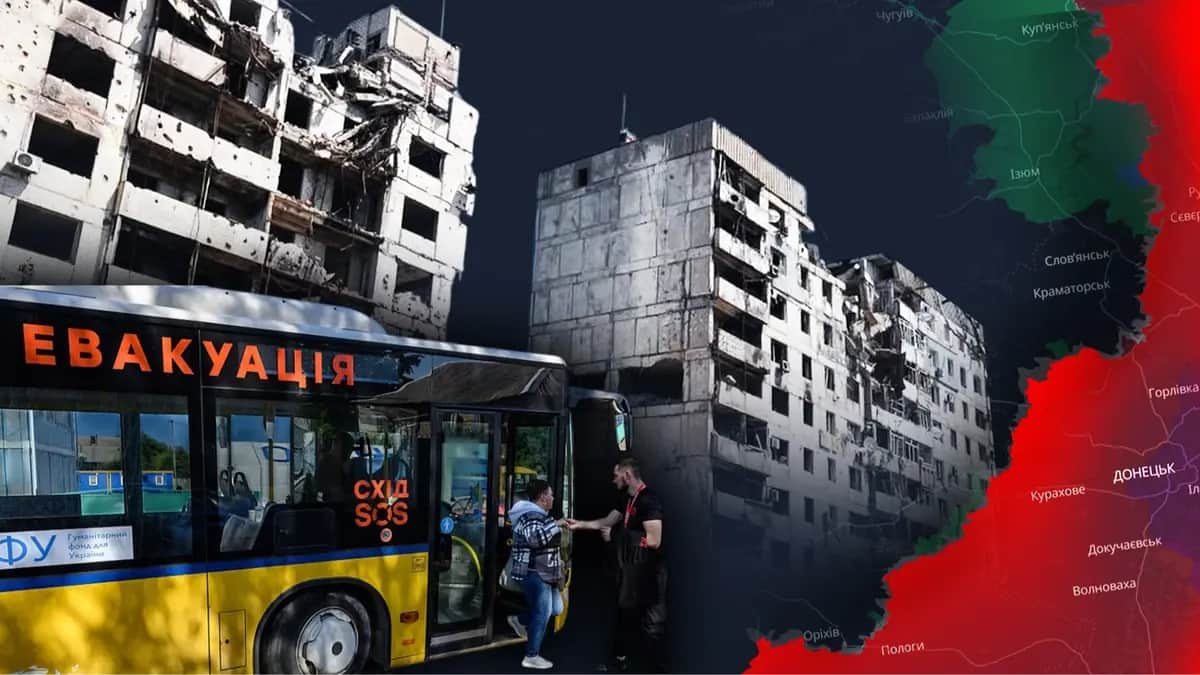
More than six million people continue to live in Ukraine’s frontline regions, despite daily attacks and the threat of occupation. Ukrainska Pravda spoke with residents of these areas and psychologists. Reasons for staying include adapting to danger, fearing the need to start over, caring for loved ones and hoping the war will end soon.
One answer to the question of why people do not leave was, “I’m afraid to start my life over.” Another person who spoke to UP said she could not imagine how she would transport her peacocks and was not considering leaving the birds in Zaporizhzhia Oblast. As the publication notes, residents of frontline settlements gave various reasons, but many were connected to what a person risks losing or has to change after moving.
Reported by pravda.com.ua.
Psychologist Valentyn Kim explains that a person who has experienced shelling and other dangerous events several times gradually adapts to them. The threat begins to seem like a familiar backdrop. In his account, people may perceive danger as increasingly localized: first as a threat to the region, then to the city, street or specific home. This narrowing allows them to continue their daily lives, even though the danger itself does not disappear.
UP tells the story of a resident of a village near the line of contact in Zaporizhzhia Oblast who has been planning to leave for the fourth year, but keeps postponing the deadline. At first, he tied it to the first missile strike on the settlement, then to a guided aerial bomb, and later to the arrival of FPV drones. Now his condition is the point when “things get even worse.”
Iryna Hubeladze, director of the Institute of Social and Political Psychology, describes setting such a notional point as a way to regain a sense of control: a person identifies an event after which they supposedly will definitely leave. But, she says, this mechanism can create the illusion that the situation is under control and ultimately prevent a timely decision based on safety concerns. Kim adds that people respond to new threats by developing ways to survive, and this too can become a reason to postpone moving.
Kim gave UP the example of bank employees in Kherson: when a drone hovered over the district, they did not leave the branch. During shelling, they sheltered in the basement, where there was a water supply and a charging station, and told management how many people were in the shelter so they could be helped if the building collapsed. According to the psychologist, these ways of adapting to specific threats help people survive, but can also strengthen the feeling that staying is safer than going somewhere unfamiliar.
A familiar home, familiar surroundings and clear rules can seem controllable, while moving means having to enter the unknown. Kim puts it metaphorically: when a person sees a wolf, bushes they used to fear can become a refuge. In the same way, against the backdrop of a new threat, a familiar place can seem safer, while moving can feel like a new, unknown danger.
At the same time, Hubeladze cautions that the line between healthy adaptation and an inadequate assessment of danger is blurred. Adaptation can dull vigilance and reinforce the idea that the worst will happen to anyone but you. The other extreme, according to UP’s report, is exhaustion and a fatalistic attitude: “If it hits, it hits.”
Practical questions arise before moving: where to find money, housing and work, and what to do in a new city or country. The behavior of loved ones also affects the decision: people who spoke to UP said they would take into account whether relatives, friends or neighbors would leave; some had agreed to evacuate together. Hubeladze believes that fear of the discomfort of moving and rebuilding one’s life often outweighs safety considerations.
The prospect of exchanging one’s own home for a rental or temporary shelter, as well as the need to care for elderly or mobility-impaired relatives, can also stand in the way of moving. Kim says some people worry about whether they will be needed by anyone in a new place and whether they will be able to maintain their usual professional status there. Government programs and local initiatives exist, but, he says, moving remains a challenge that not everyone is ready for.
Another common explanation is the expectation that the war will end soon. UP writes that those it spoke to relied on various predictions: from talk of “two or three weeks” at the start of the full-scale war to statements about possible peace agreements by the end of 2026. Psychologists note that people may look to politicians’ words for confirmation of their own hopes and hear above all what aligns with their beliefs.
In Hubeladze’s view, during a crisis people may expect politicians or public opinion leaders to give detailed instructions on what to do. This, she says, creates the illusion that responsibility for decisions can be shifted to officials, who may not know what a particular person needs. The psychologist stresses that such expectations do not eliminate the personal choice of whether to stay or leave.
Refusing to move does not in itself mean supporting Russia or collaborating with it, UP emphasizes. People may fear change, lack the money to settle somewhere else, or care for elderly and sick relatives who may not withstand the move. The report also describes three forms of evacuation in Ukraine: voluntary, mandatory and forced. Local authorities announce and organize the latter two; people may refuse mandatory evacuation, but not forced evacuation.
In early March 2026, President Volodymyr Zelenskyy signed a law allowing police to evacuate children from dangerous areas without their parents’ consent, UP reports. At the same time, according to the publication, 57 thousand civilians remained in the active combat zone in Donetsk Oblast, including more than 1,7 thousand children. These figures and the accounts of those interviewed show that the possibility of evacuation alone does not eliminate fear of moving, everyday difficulties or the hope that the danger will pass.