

Wales considers releasing up to 60 eagles: conservationists warn of risk to seabirds
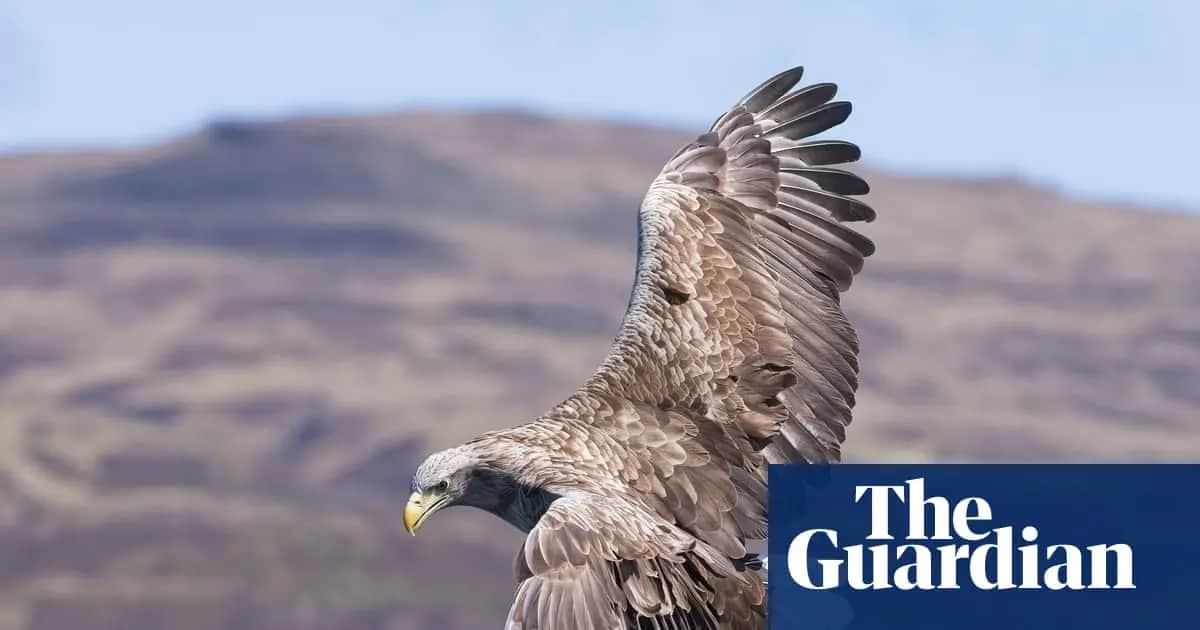
A proposal has been made to release up to 60 white-tailed eagles in Gwent, in southern Wales. Some scientists and conservationists warn that the predators could threaten seabird colonies, while the organisation leading the project does not expect a significant impact on any individual species.
The plan has divided conservation organisations: Gwent Wildlife Trust supports it, while the Wildlife Trust of South & West Wales (WTSWW) opposes it. Separately, 20 young eagles are due to be released on Exmoor over the next three years. The return of white-tailed eagles to Britain comes after the species became extinct there in 1918; it has not yet been reintroduced in Wales.
Reported by The Guardian.
Among the species that scientists and conservationists warn could face declines in breeding populations are puffins, guillemots, razorbills, fulmars and kittiwakes. The islands of Skomer and Skokholm, important seabird strongholds, are a particular source of concern. WTSWW chief executive Sarah Kessell said eagles could disturb birds and drive them away from their nesting sites. Last month, an eagle from the Exmoor programme was spotted over Skomer.
According to data cited by The Guardian, seabird numbers across Britain have fallen by a fifth over the past five years, although populations in southern Wales remain relatively healthy. A representative of the Wildfowl and Wetlands Trust (WWT), which is leading the Gwent project, stressed that conservation measures always involve some risk, which must be assessed on the basis of evidence and weighed against the potential benefits.
WWT plans to establish seven-nine breeding pairs of eagles in Gwent gradually over ten years and does not expect the project to significantly reduce the numbers of any individual species. The organisation’s representative also noted that eagles have a varied diet, including carrion, fish and small mammals. In a 2020 study, birds of particular conservation concern in the EU made up approximately 1% of the identified eagle prey east of the Baltic Sea.
Opponents of the plan point not only to eagles directly hunting seabirds and their chicks. Researchers explain that frightened adult birds may temporarily leave nesting sites, leaving chicks more vulnerable to other predators, including gulls and corvids.
A study from Norway, published in 2023, is cited as an example of the possible impact of eagles on colonies. It linked a rise in predator numbers to an accelerated decline of a kittiwake colony on Røst in 2020. The colony was already shrinking, and a shortage of fish was forcing birds to spend longer searching for food and less time protecting their chicks. According to the study’s co-authors, there were only two-three breeding pairs of eagles in the area, but many young birds gathered there and disturbed the colony.
At the same time, the authors of the Norwegian study cautioned that its findings cannot automatically be applied to southern Wales: they do not consider a repeat of this scenario inevitable, but cannot rule it out either. Natural Resources Wales, which is considering the application to release eagles in Gwent, expects to reach a conclusion by the end of the year. If the agency is inclined to grant a licence, public consultations will be held in late 2026 — early 2027 before a final decision.