

Sánchez warns of risk of “planetary annihilation” as multilateralism weakens
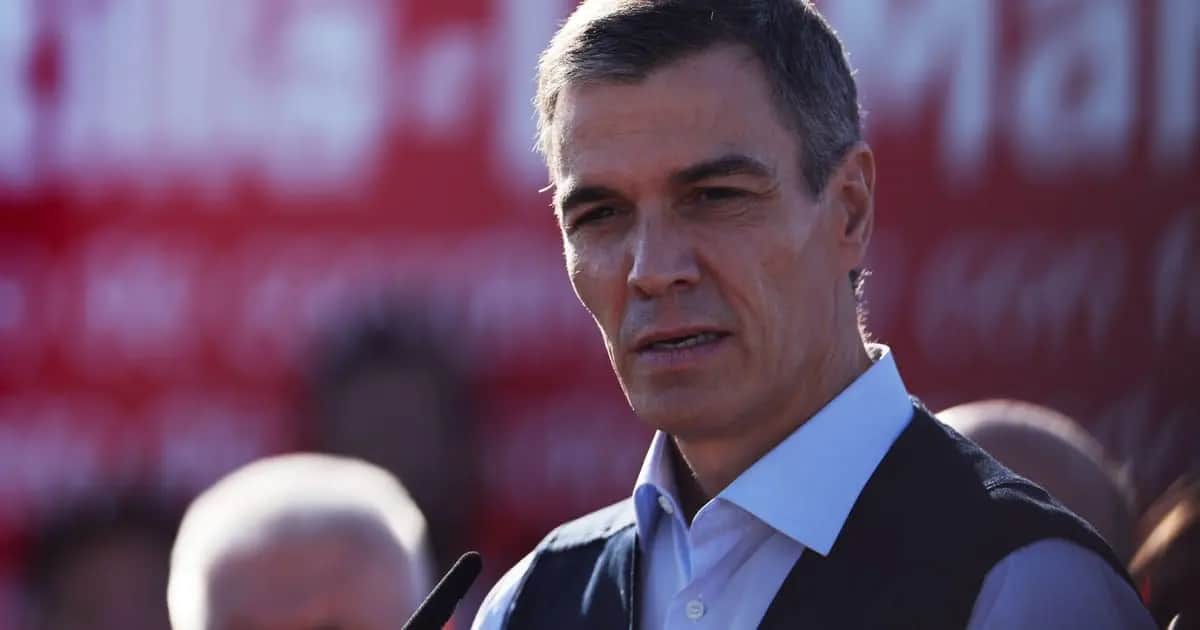
Spanish Prime Minister Pedro Sánchez said that the weakening of multilateralism increases the chances of crises quickly escalating into “planetary annihilation.” In an article for Foreign Affairs, he also called for reforming the UN and opposed an intensification of war rhetoric.
According to POLITICO, Sánchez wrote in the article that a new world war could await at the end of the current path. He presented his position as a defense of international cooperation and stressed that neglecting it makes global crises more dangerous.
Reported by politico.eu.
As an example of his policy, Sánchez cited Madrid’s decision earlier that year not to allow Washington to use Spanish bases in the war against Iran. He explained that this was neither a hostile move toward an ally nor a sign of neutrality or sympathy for Iran’s authorities: Spain, he said, believed that taking part would fuel escalation. The prime minister added that the country had to be ready to say “no” for the sake of peace, even at the cost of political losses.
Sánchez suggested that if more countries refused to take part in this way, the wars in Gaza and Iran would be much harder and more expensive to wage. He presented this as his own assessment while defending the approach of the government he has led since 2018.
The prime minister also criticized the EU-backed strategy of preparing for war. He said that even centrist leaders are adopting the language of war readiness, and that such rhetoric, while not meaning an intention to start a war, fuels dangerous militaristic thinking.
Sánchez linked his anti-war position to decades of civil society activism in Spain. He recalled the “¡No a la guerra!” (“No to war!”) protests against the 2003 invasion of Iraq, which was supported by José María Aznar’s conservative government, and said that he himself took part in the demonstrations.
Sánchez was skeptical of ad hoc formats as a substitute for effective multilateral cooperation. In particular, he mentioned the Coalition of the Willing—a group of 34 countries that pledged to increase aid to Ukraine—and linked the emergence of such initiatives to the ineffectiveness of multilateralism.
As a response, Sánchez proposed reforming the UN, including the Security Council, which, in his view, no longer reflects the modern world. He called for strictly limiting the permanent members’ veto power, especially in cases of mass atrocities, genocide, crimes against humanity and war crimes, and for abolishing it in the long term.
Among Sánchez’s other proposals were extending the terms of non-permanent Security Council members and allocating seats primarily to countries in Africa and Latin America. He also supported electing a woman as UN secretary-general.