

Ukraine’s Defence Intelligence publishes data on 11 Russian banks operating in temporarily occupied territories
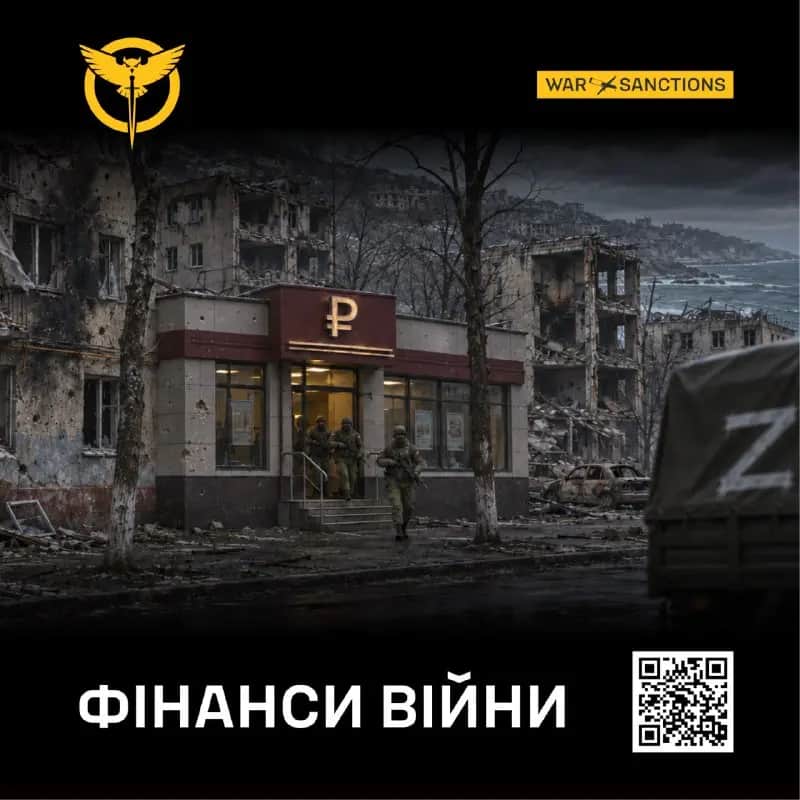
Ukraine’s Defence Intelligence, together with the Office of the President of Ukraine and the National Bank of Ukraine, has published data on 11 Russian banks on the War&Sanctions portal. According to the intelligence agency, they operate in temporarily occupied territories, take part in sanctions evasion schemes and serve enterprises in Russia’s military-industrial complex.
Ukraine’s Defence Intelligence describes banking services in occupied territories as one means of forcibly integrating those territories into Russia. This includes the “State Programme: New Territories,” which provides preferential mortgage loans and loans secured by real estate in temporarily occupied territories. According to the agency, these services are available only to Russian citizens; the intelligence agency links this to the introduction of the ruble zone and efforts to encourage the illegal issuance of Russian passports.
Reported by Головне управління розвідки МО України.
According to Ukraine’s Defence Intelligence, Russian banks in temporarily occupied territories serve the occupation authorities and the Russian army, and process payments for enterprises that cooperate with Russia. Among the examples cited is the commercial bank RostFinance, which, according to the intelligence agency, has opened a network of offices in the occupied parts of Donetsk, Luhansk and Zaporizhzhia regions and takes part in the aforementioned mortgage programmes.
Ukraine’s Defence Intelligence also reports that Genbank moved its operations to occupied Crimea after 2014 and became a financial institution relied on by the occupation administration. Another bank named in the publication, the Black Sea Bank for Development and Reconstruction, according to the intelligence agency, uses assets and property belonging to a Ukrainian financial institution that were expropriated by the Russian authorities after the annexation of Crimea.
According to Ukraine’s Defence Intelligence, the newly published data also covers banks involved in Russian government schemes to overcome international financial isolation, the operation of regional clearing platforms, and the servicing of state defence contracts and military-industrial complex enterprises. Following the update, the “Finance of War” section contains information on 40 banks, financial institutions and payment systems that, in the agency’s assessment, support Russian aggression to varying degrees.