

Privy Council considers ban on same-sex relationships in Trinidad and Tobago
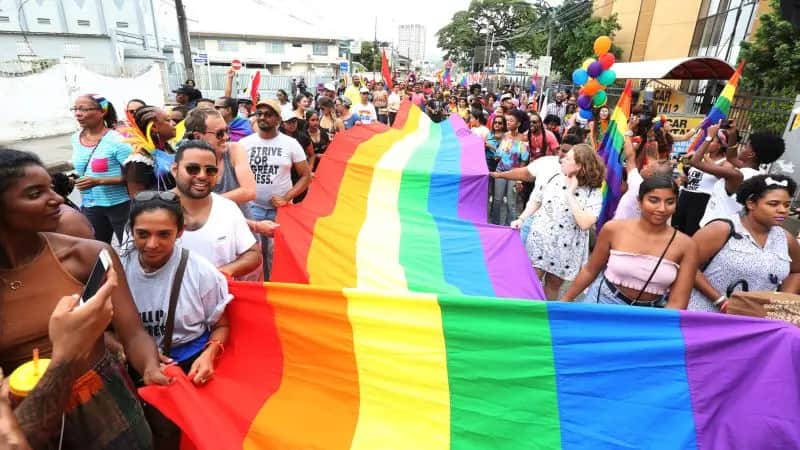
The Judicial Committee of the Privy Council in London was due to announce its decision on November 10 on whether Trinidad and Tobago’s law criminalizing same-sex sexual relations is constitutional. According to CNN, the ruling in activist Jason Jones’s case could have wider significance for challenges to similar bans in former British colonies, although legally it will apply only to Trinidad and Tobago.
The provisions Jones is challenging carry a prison term of up to five years for “buggery”—an outdated and now offensive legal term—and up to two years for “gross indecency.” The Privy Council, the highest court of appeal for a number of former British colonies, is to assess whether these bans comply with the national constitution.
Reported by CNN.
Jones, an LGBTQ+ rights activist, was born in Trinidad and now lives in the United Kingdom. He first brought his case before the High Court of Trinidad and Tobago and won in 2018, but in 2025 the Court of Appeal overturned that ruling. Jones and his lawyers then referred the case to the Privy Council for a final hearing.
The ban dates back to the colonial period: the British Empire introduced the relevant law in Trinidad and Tobago in 1925. After independence, the country retained it through a provision protecting laws enacted before independence from challenge. According to Rhea Mohammed, a lawyer and director of the Caribbean Human Rights Centre, the mechanism was initially intended to prevent legal uncertainty temporarily as former colonies transitioned to independence.
In 1986, Trinidad and Tobago repealed the sexual offences provisions of the 1925 act and introduced stricter rules: they increased prison terms and extended penalties for indecent conduct to women as well. According to CNN, this change enabled Jones to challenge the law. His lawyers argued that the 1986 provisions differed from the colonial act and were therefore not protected by the provision preserving older laws.
The case’s potential impact beyond the country will depend on the outcome. If the Privy Council rules in Jones’s favor, its decision will be binding in Trinidad and Tobago, but activists and legal experts hope it will help challenge similar bans in other former colonies. Mohammed told CNN that although the ruling will formally apply to one jurisdiction, its legal reasoning could influence the consideration of a similar case in another country that uses the Privy Council appeals system.
According to the British charity Human Dignity Trust, same-sex relations between men are criminalized in at least four other former British colonies in the Caribbean—Jamaica, Guyana, Grenada, and Saint Vincent and the Grenadines. However, not all of these countries fall within the Privy Council’s appellate jurisdiction. The region is also debating whether to replace it with the Caribbean Court of Justice; Belize, Guyana, Barbados, Saint Lucia, and Dominica have already made that court their highest court of appeal.