

POLITICO author describes taking test for selection to EU institutions
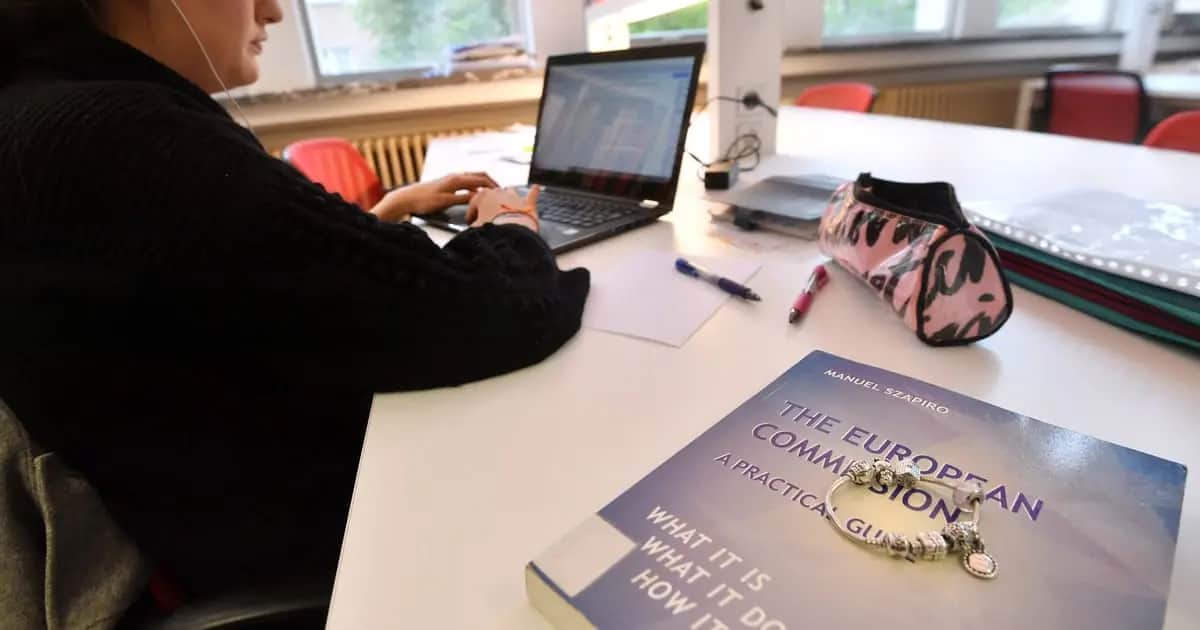
In a report for POLITICO, an author described the first round of a competition for jobs in EU institutions: an online test with three sections assessing verbal, numerical and abstract reasoning. According to the author, the system monitored candidates through a camera and recorded audio, while the time limit forced them to rush their answers.
According to the publication, this was the first competition for university graduates in seven years. EU citizens with a bachelor’s degree could apply, and nearly 175 thousand people chose to do so. For comparison, there were 22 thousand candidates in 2019. The final reserve list had 1490 places. Participants in the first round had to take three reasoning tests; POLITICO says these are the initial stage of selection for jobs in EU institutions.
Reported by politico.eu.
The author says preparation began with reviewing documents about the competition rules and how to take the online test. For practice, the author revised percentage calculations, reading bar charts and tasks involving sequences of shapes. The author prepared moderately: practising for about 20 minutes a day and reviewing tips learned during previous EU exams in the week before the test.
The author writes that another place to prepare was Facebook groups for candidates. There, the author read participants’ posts, where people shared tips and impressions. Candidates also resold practice books and compared paid preparation services with the actual test. The author describes this online community as a way to discuss the competition experience, although they approached the exam without particularly intensive practice.
The author took the test at home. Once logged into the testing environment, other tabs and programs became inaccessible, the camera filmed the candidate, and the system recorded audio throughout the exam. Before starting, candidates had to photograph an identity document and record a video of the room, showing, among other things, the desk from above and below. The author noted that showing the underside of the desk was awkward.
The first section assessed verbal reasoning: 20 questions in 35 minutes. After reading a short text, candidates had to determine which of four statements was supported by what they had read. The author writes that, because of the time limit, they answered 15 questions, then hurriedly selected random answers in the final 14 seconds, hoping to guess correctly.
Next came numerical reasoning — 10 tasks in 20 minutes involving data tables and percentage calculations. The author usually understood how to approach the questions, but the calculations sometimes involved five or six steps. They managed to complete about half and guessed at the rest. Among the examples, the author mentioned calculating the difference in GDP per capita between France and the United Kingdom in 2003.
During the numerical section, candidates could use a calculator and a text field for notes, but, the author observed, these tools took up almost the entire screen. This made it harder to keep track of the question, answer options and table at the same time. Another restriction was a ban on leaving the desk: the author writes that breaking the rule could be grounds for disqualification.
The final section assessed abstract reasoning: 10 tasks in 10 minutes. For each one, candidates had to determine which shape continued the sequence. The author called this their favourite part, but after completing all three sections, they could not judge how well they had done. They did not know whether they would advance to the next stage; the result would determine whether they continued in the competition.