

The Northern Taurids peak on Thursday: best viewed at night
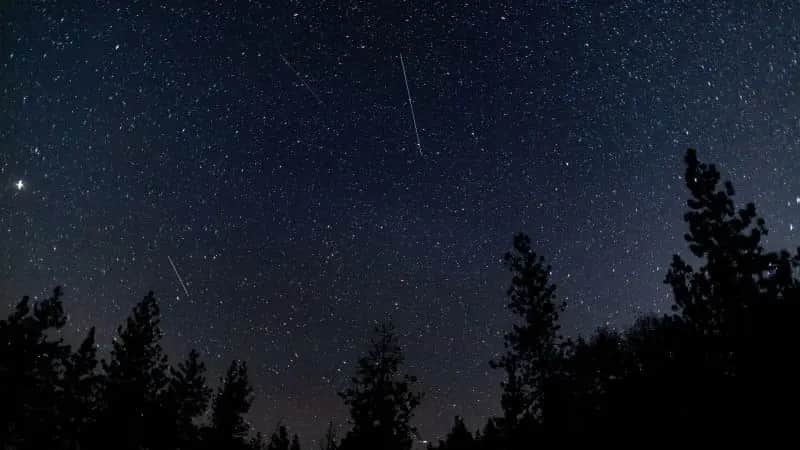
The Northern Taurid meteor shower is expected to peak at 13:00 Eastern Time on Thursday, November 12. However, the best time to watch is Wednesday evening and overnight into Thursday, CNN reports.
After the new moon on Monday, viewing conditions should be favorable: the Moon will be 4% illuminated on Wednesday evening. Researcher Mark Boslough of the University of New Mexico called conditions very good, since moonlight will not interfere with seeing meteors. CNN says Wednesday evening will offer the best chance to watch the shower, although its peak will come the following afternoon.
Reported by CNN.
To see the meteors, CNN recommends finding a dark location and giving your eyes about half an hour to adjust to the darkness, while avoiding bright screens. The flashes will last a few seconds. They will appear to come from the constellation Taurus, but can be seen anywhere in the sky: the constellation indicates the direction from which the shower seems to radiate, not the only place meteors appear.
The Taurids are known for fireballs—especially bright meteors that can shine brighter than Venus. According to CNN, these flashes are produced by relatively large fragments, ranging in size from a marble to a small boulder. Some fireballs leave glowing trails of ionized air molecules that disappear after a few seconds; others form smoky cloud-like streaks that can remain in the sky for several minutes.
The Northern Taurids are active every year from October 20 to December 10 and typically produce about five meteors per hour. When this shower overlaps with the Southern Taurids, the number doubles, according to CNN. The Southern Taurids end on November 12. In general, meteor showers occur when Earth passes through debris from asteroids or comets: particles enter the atmosphere, burn up and leave a glowing trail.
The annual Northern Taurids are associated with Earth passing through debris from the asteroid 2004 TG10, discovered in 2004. Scientists believe the asteroid may have been part of a much larger body that broke up about 20 thousand years ago, forming the Encke complex. The Encke comet, which is associated with the Southern Taurids, is also linked to it. At the same time, CNN reports, citing EarthSky, that a more recent study has proposed that the Northern Taurids may be caused not only by debris from 2004 TG10, but by ten asteroids.
Researcher Mark Boslough’s group monitors meteor showers to assess the risk posed by objects that could collide with Earth. The scientist said that observing the Taurids should help determine whether any of the debris includes potentially hazardous objects. Researchers are also preparing for an especially dense Taurid stream in 2032: CNN reports that the team plans to use a telescope to detect small, dark objects by the heat they emit.
At the same time, Boslough stressed that the idea of a dense swarm of hazardous objects remains hypothetical and has little evidence to support it. He said the monitoring is being carried out as a precaution, not because there are signs of an imminent collision with Earth. The scientist added that an elevated risk during such periods cannot be entirely ruled out.