

Global Methane Hits Record Highs as US and EU Delay Climate Rules
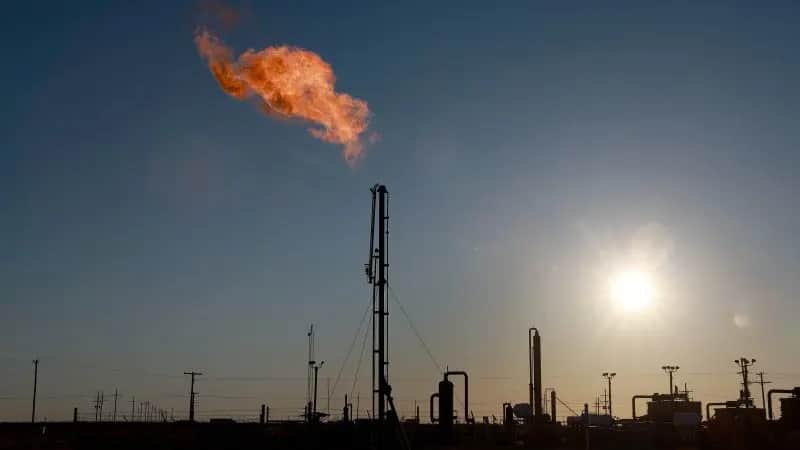
Global methane levels continue to rise, while experts say efforts to curb them are insufficient. Meanwhile, Donald Trump’s administration is moving to weaken US restrictions on the oil and gas industry, and the European Union has postponed by three years requirements for fossil fuel importers to report emissions.
CNN reports on satellite tracking of methane and government decisions. Satellites operated by the nonprofit organization Carbon Mapper cross the planet from north to south about 16 times a day, collecting hundreds of images. They search for so-called super emitters — a small number of sites responsible for a significant share of pollution. These include oil and gas facilities and landfills.
Reported by CNN.
In the US, Carbon Mapper has identified oil and gas sites with compelling evidence of persistent methane pollution. Since the start of the year, the largest number of major plumes — eight — were recorded near Orla, Texas; Stanton, Texas, and Ringgold, Louisiana, were next on the organization’s list. Major leaks are not limited to the United States: they are also found in Turkmenistan and Venezuela, among other places. CNN notes that high-resolution satellites are increasingly able to detect such plumes from space with greater precision.
Methane is not the main driver of climate change — carbon dioxide is — but over the short term it traps significantly more heat. According to an estimate cited by CNN, over 20 years methane traps about 80 times more heat than CO2 and accounts for about 30% of current warming. About 40% of methane comes from natural sources, such as wetlands; the rest is linked to human activity, including oil, gas and coal production, agriculture and landfills.
According to a recent report by the International Energy Agency, global methane levels reached an unprecedented high in 2025. China was the largest polluter, primarily because of emissions from coal mines, followed by the US and Russia. Fossil fuels account for about 35% of human-caused methane, and the report found no signs that these emissions are declining.
At the same time, the IEA estimates that technical measures can already cut about 70% of emissions from fossil fuel production. Methane can not only be eliminated but also used as fuel. Edward Parson, a professor of environmental law at the University of California, Los Angeles, cited by CNN, pointed to a contradiction: for companies, methane is a potential commodity. The outlet also links its value to rising oil and gas prices amid the war with Iran.
In the US, the Trump administration announced plans to significantly weaken rules introduced under former President Joe Biden. The requirements were projected to cut pollution from the oil and gas industry by 80% by 2038. The US Environmental Protection Agency proposed repealing a program requiring major methane leaks to be detected, investigated and repaired, and easing requirements for low-producing wells. These wells produce little oil and gas but can cause significant methane pollution.
The EPA justifies revising the rules on economic grounds: the agency says the changes will save consumers and businesses 45 billion dollars. Critics, in turn, point to the costs of lost gas, air pollution and the effects of climate change. Democratic Senator Sheldon Whitehouse of Rhode Island told CNN that these costs ultimately fall on Americans, including through energy bills, medical expenses and damage from fires and floods.
The European Union has also delayed action. Last month, the bloc approved a three-year delay to requirements that oil, gas and coal importers track and report methane emissions. Mark Brownstein, senior vice president for energy at the US-based Environmental Defense Fund, told CNN that every year of delay has a real cost. Professor Parson attributed the retreat from climate measures to growing pressure from fossil fuel interests.
The American Petroleum Institute, which represents the US oil and gas sector, said the industry works every day to cut emissions while meeting demand for affordable energy. The organization supports direct methane regulation and said it was working with the administration on a balanced approach. CNN also cites some positive trends: despite rising global oil and gas production, the industry’s methane emissions remained relatively stable. However, Brownstein said, this progress does not extend across the entire industry.
The IEA has reported a decline in the number of super-emitting events in some countries, including Argentina and Algeria, as well as signs that the growth in methane pollution from China’s coal mines may be slowing. In the US, California, New Mexico and several other states have their own rules, even as the federal government weakens regulation. A Carbon Mapper representative called for stronger government leadership, while a representative of the Environmental Defense Fund stressed companies’ responsibility and the potential economic benefits of controlling emissions.