

Le Pen wants to cut the EU diplomatic service if she wins the election
Marine Le Pen wants to abolish or significantly downsize the European Union’s diplomatic service if she wins France’s 2027 presidential election. POLITICO reports this, citing four representatives of her party, the National Rally.
The National Rally believes the European External Action Service duplicates the diplomacy of member states, wastes taxpayers’ money and prevents European countries from acting on the international stage. Charles-Henri Gallois, an adviser to party leader Jordan Bardella, told POLITICO that the service’s usefulness was limited. He also claimed that its legitimacy was not recognised by, among others, the United States and China.
Reported by politico.eu.
The plan to cut the service is part of broader criticism of the EU’s role in foreign policy. POLITICO writes of rising tensions between nationalist parties and Brussels: they want to return powers to national governments and view foreign policy as one of their priorities. At the same time, the EU diplomatic service has long competed for influence with the European Commission, led by Ursula von der Leyen.
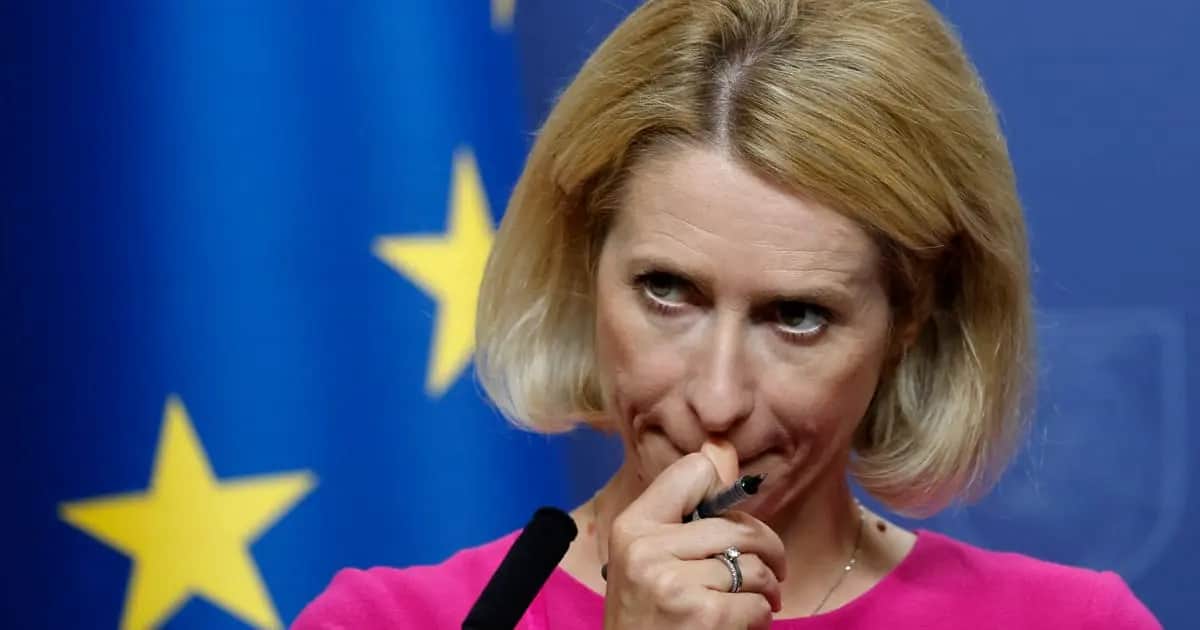
The differences between Le Pen and EU foreign policy chief Kaja Kallas are also evident on Ukraine. Kallas, Estonia’s former prime minister, supports Ukraine and sharply criticises Vladimir Putin. Le Pen, by contrast, calls for an international peace conference to resolve the war and says Europe no longer has the money to help Kyiv. According to POLITICO, they have not publicly clashed.
National Rally MEP Jean-Paul Garraud criticised Kallas for what he described as overly belligerent rhetoric on Ukraine. He told POLITICO that if his party spoke the same way, it would mean full-scale war with Russia. Such statements demonstrate how different Le Pen’s party and the EU leadership are in their approaches to the war and how to talk about it.
During a recent visit to Brussels, Le Pen told journalists that France would no longer accept the European Commission’s diplomatic powers, let alone military or intelligence powers. According to four anonymous National Rally representatives, the party’s proposed cuts to EU institutions would also affect the diplomatic service. This course could lead to a clash with pro-European parties, which consider it an important tool in an increasingly competitive and aggressive world.
The European External Action Service responded to the criticism. Its spokesperson told POLITICO that EU diplomacy protects European interests, including France’s, and that the EU’s global network of delegations is an important strategic asset. Irish MEP Barry Andrews, for his part, warned that France is a middle-ranking power on the world stage and cannot stand up to the United States or China on its own without Europe’s collective strength.
The political conflict could also concern money. Last month, the National Rally presented a plan to cut France’s contribution to the EU budget by €11 billion in 2027; without such a reduction, the contribution is expected to be about €30 billion. France cannot, however, cut the diplomatic service’s budget unilaterally. The party says it is counting on allies in Italy, Spain’s nationalist Vox party and the Czech Republic’s Andrej Babiš.
Amid this campaign against the diplomatic service, a separate debate about its reform is also under way. France and Germany jointly proposed integrating it with the European Commission, which has a larger budget and controls trade and technology policy. The European External Action Service itself has an annual budget of almost €1 billion, more than 5 200 employees worldwide and more than 100 delegations. According to POLITICO, European Commission officials have also considered cutting the Global Europe budget, which stood at €200 billion in the previous long-term budget, by a maximum of 40% in the next period.
The political backdrop also includes polling: according to a POLITICO poll, Le Pen had 34% in the first round, ahead of left-wing leader Jean-Luc Mélenchon at 17% and centre-right politician Édouard Philippe at 16%. Polls also indicated that she could beat most potential opponents in the second round. These are poll results, not the outcome of an election, which is due to take place in 2027.