

A 2.8 trillion-parameter AI model was run on a home server with Optane memory
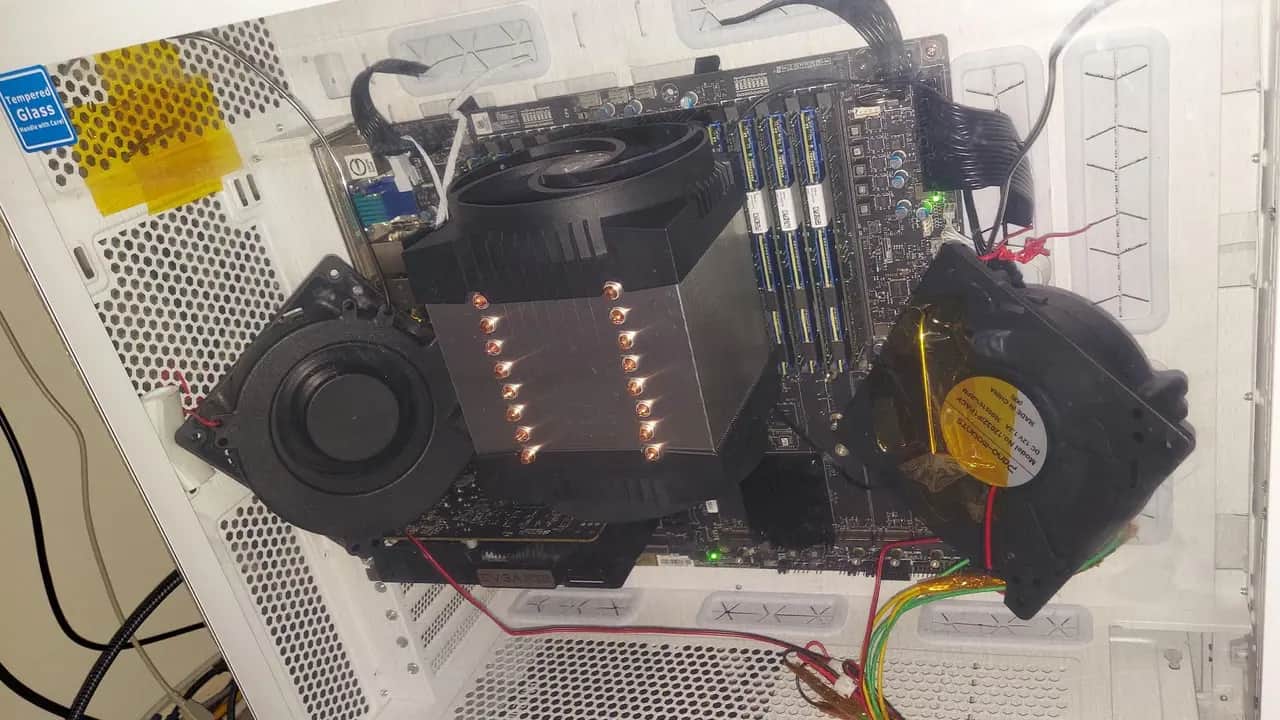
A Reddit user ran the 2.8 trillion-parameter Kimi K3 model on a server with a 40-core third-generation Xeon Scalable processor, using second-generation Intel Optane memory instead of GPUs for computing. According to Tom’s Hardware, the system produces less than one token per second, and its builder warns that the modules heat up significantly and could pose a risk to nearby RAM.
The system used Optane Persistent Memory 200, a type of memory Intel has discontinued. In App Direct mode, it works as a separate persistent area that software can access directly. This differs from Memory Mode, in which Optane is used as system memory and DRAM as a cache. That was the configuration chosen in an earlier project by another enthusiast.
Reported by tomshardware.com.
According to Tom’s Hardware, with 1-bit quantization the model ran at 0.85 tokens per second. Switching to 3-bit quantization lowered the rate to 0.75 tokens per second. These results were recorded before tuning the number of threads and NUMA node affinity, so the builder may still be able to optimize the system.
The comparison with the earlier home setup is not direct: it used the smaller, trillion-parameter K2.5 model, 2-bit quantization, Memory Mode and an RTX 3060, which handled part of the model. That system reached about four tokens per second. The new setup runs inference without a GPU, but is significantly slower.
The main reason for turning to Optane was the need for a large amount of memory. According to the publication, even the smallest quantized version of Kimi K3 available to the community requires at least 610 GB of RAM. The builder said used Optane cost a fraction of the price of an equivalent amount of DRAM. The article notes that the model is not intended for home use and that its developer, Moonshot AI, recommends running inference in data centers.
Another problem is temperature. During extended inference, the Optane modules heated up significantly, and the builder warned of possible danger to the DRAM located nearby. To cool the modules, he aimed two 12 W blower fans at them and stressed that active DIMM cooling is essential in this kind of system.
Tom’s Hardware links the cooling requirements to the modules’ specifications: Intel calls for forced airflow of 2.4–2.7 meters per second. A module can draw 12 or 15 W, depending on conditions. According to the specifications cited in the article, the memory throttles at 83 °C, and an emergency shutdown is supposed to occur at 85 °C. These are Optane specifications, not temperatures measured during the described run.
Intel introduced the Optane PMem 200 series in 2020 for third-generation Xeon Scalable processors; the modules were available in capacities of 128, 256 and 512 GB. The first home project used previous-generation Optane, while the new setup switched to PMem 200 and App Direct mode. Its builder plans to add a GPU and place part of the model in DRAM as a faster tier of memory. Further tests are expected to show how this affects performance.