

Japan’s Supreme Court Deems 2025 Election Unconstitutional in Its State, but Does Not Overturn It
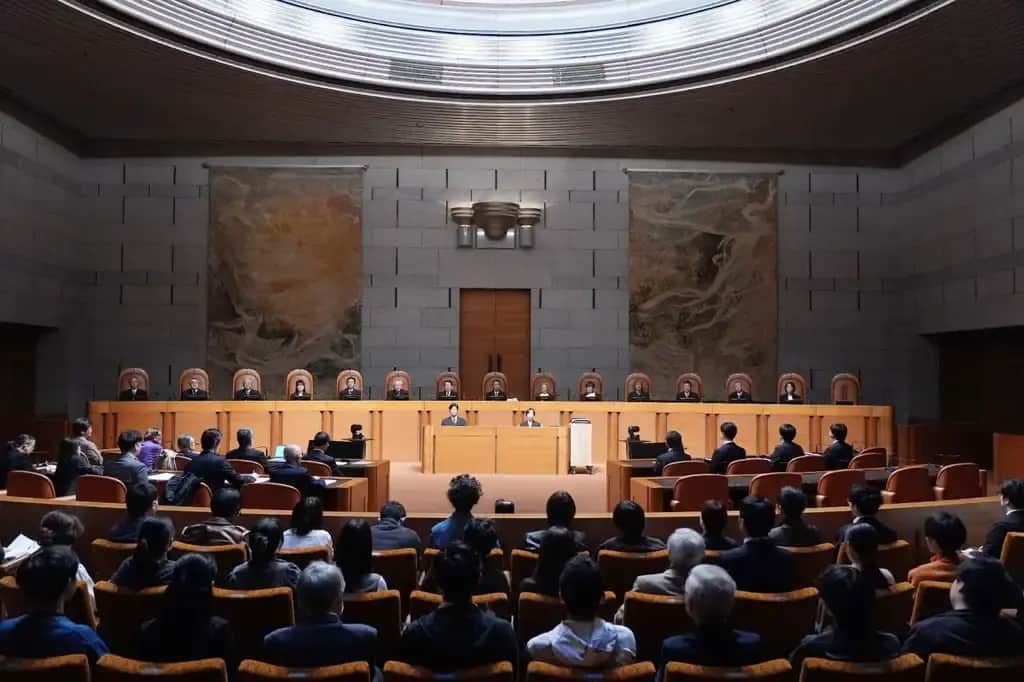
Japan’s Supreme Court ruled that the July 2025 House of Councillors election was held in a “state of unconstitutionality” because of unequal vote weights. However, it did not invalidate the results; according to The Japan Times, the ruling has reignited debate over electoral reform.
The court considered 16 lawsuits filed by two groups of lawyers. They argued that the unequal representation of voters was unconstitutional and asked the court to overturn the election results. According to the court’s assessment, the difference in vote weight reached 3.13: a vote in a less populous district carried the same weight as one vote in a densely populated urban district.
Reported by Mezha.
The court criticized Japan’s parliament for reaching an “impasse” and making no concrete effort to eliminate the inequality, which the court called unacceptable. However, a finding of a “state of unconstitutionality” does not automatically overturn an election: the wording gives parliament time to make changes.
As The Japan Times explains, when assessing cases involving unequal vote weights, the court considers both the scale of the problem and whether parliament is working to address it. If parliament responds too slowly, the court may rule that an election is unconstitutional—a finding that can lead to its results being overturned. In the case of the 2025 election, the court did not take this step.
This is not the first time the Supreme Court has used the phrase “state of unconstitutionality.” According to The Japan Times, it was applied to elections in 1992, 2010 and 2013. The maximum disparities in vote weight in those cases were 6.59, 5.00 and 4.77, respectively—higher than the 3.13 recorded in the case concerning the 2025 election.
Following previous rulings, parliament changed district boundaries and merged districts with fewer voters. In particular, in 2016 Tottori and Shimane prefectures were combined into one district, and Tokushima and Kochi into another. According to The Japan Times, after these changes the maximum disparity fell to 3.08.
Since then, parliament has not agreed to further mergers of House of Councillors districts: political parties have failed to reach agreement on the best way to reduce the imbalance. Reforming this chamber is more difficult than reforming the House of Representatives, where the boundaries of several districts in each prefecture can be changed. In the House of Councillors, each prefecture is a separate district, and even less populous prefectures have at least two seats.
Members of the House of Councillors serve six-year terms, and half of its members are elected every three years. As a result, seats in less populous prefectures remain part of the system and make it harder to reduce inequality. Changes require parliamentary agreement, so the court’s ruling alone is unlikely to lead to reform quickly.