

ISW links strikes on the Kerch Bridge to the weakening of Russian air defenses
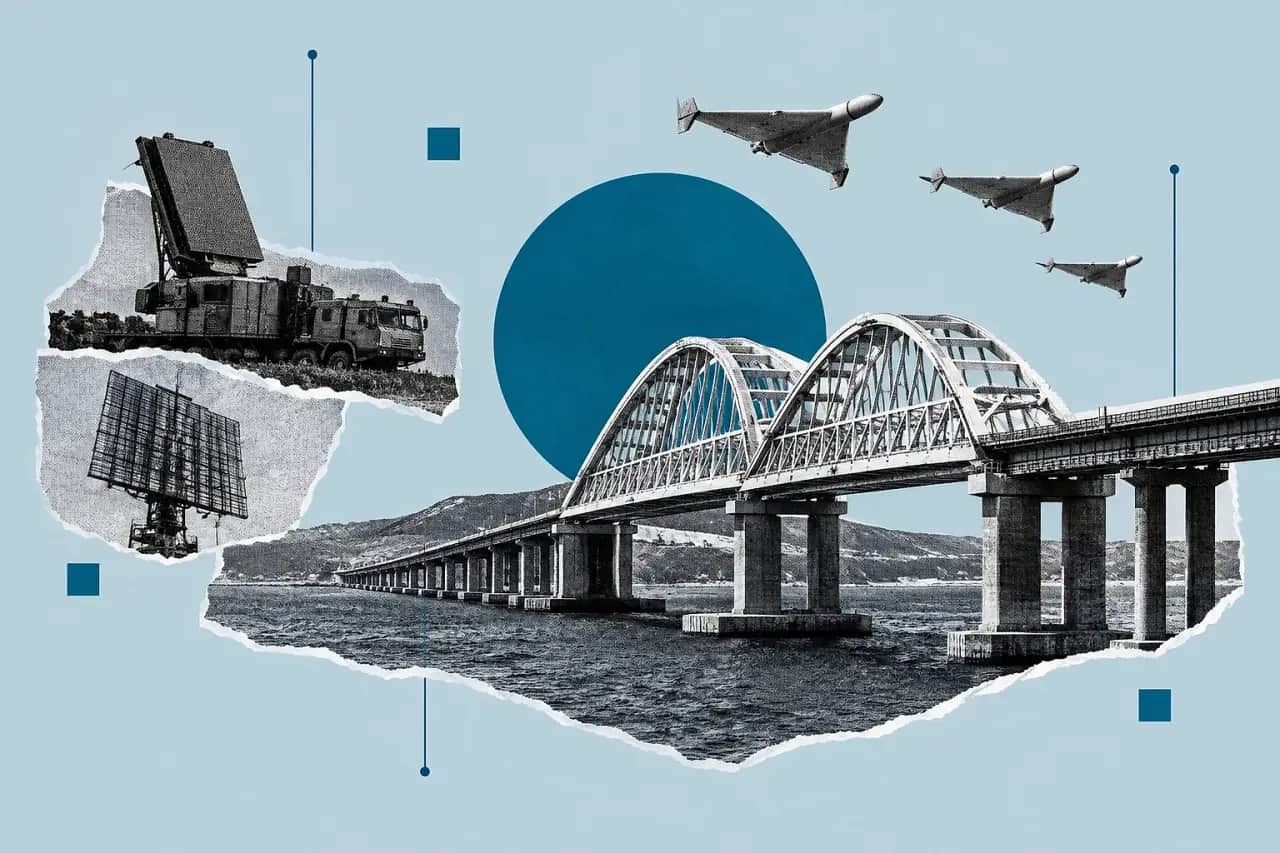
In a report dated November 17, cited by Mezha, the Institute for the Study of War (ISW) described the strikes on the Kerch Bridge as the result of a prolonged operation to weaken Russian air defenses and the use of technological solutions. The analysts say this complicates Russian forces’ connection with occupied Crimea.
According to Mezha’s account, ISW characterizes the attack as the result of mature operational planning. The analysts link it to the systematic weakening and destruction of Russian air defenses, as well as the use of technological means to hit vulnerable parts of the bridge structure.
Reported by Mezha.
The report mentions strikes by Ukraine’s Defense Forces on air defense facilities in occupied Crimea, in the part of southern Ukraine not under Kyiv’s control, in Rostov Oblast, and in Krasnodar Krai. According to ISW, the targets hit included surface-to-air missile launchers, mobile fire groups of the Russian army, and radars.
According to ISW’s assessment, cited by Mezha, Ukrainian forces gradually weakened Russian air defenses over several months. A concentrated salvo of cost-effective drones then overcame what remained and opened a corridor through which Ukrainian cruise missiles and jet-powered drones were able to approach the bridge from several directions.
The analysts also drew attention to radio-relay communications technology, which, in their assessment, both sides use to increase signal transmission range. Such relays make it possible to receive video from strike drones in real time and maintain communication with the operator. ISW believes the use of relays helped hit the support structures of the Kerch Bridge, a challenging target because of its high structural resilience.
The bridge remains an important route for supplying Crimea with food, goods, and fuel from Krasnodar Krai. ISW, as reported by Mezha, notes that previous strikes had already forced Russian forces to reduce the volume of military transport across the bridge, but it was still necessary for Russia to hold the peninsula. Now, according to the analysts, the loss of this land connection makes it more difficult to sustain Russia’s military presence in Crimea.
The Russian command will have to rely more heavily on the M-14 and M-18 highways, ISW says. The Russian-installed head of occupied Kherson Oblast, Volodymyr Saldo, said that Russia’s Defense Ministry was strengthening security along the land route between Crimea and Kherson Oblast.
ISW also reported that Ukrainian forces struck a section of the M-14 highway between Rostov Oblast and occupied Crimea that same night. According to Rostov Oblast Governor Yury Slyusar, the attacked section is in Neklinovsky District, near the bridge over the Mius River; the Russian occupation authorities designate this route as the R-280.
The Russian-installed authorities in occupied Crimea reported strikes on the Kerch Bridge on November 16 and 17. As described by Mezha, photos and videos published on Telegram channels indicated that on November 17, the arch and a span of the bridge’s road section fell into the water. Volodymyr Zelenskyy called the strike the result of a weeks-long operation by Ukrainian forces. The Kremlin said the bridge would be rebuilt.