

HP unveils ZGX Fury workstation for $132,000 with 748 GB of memory
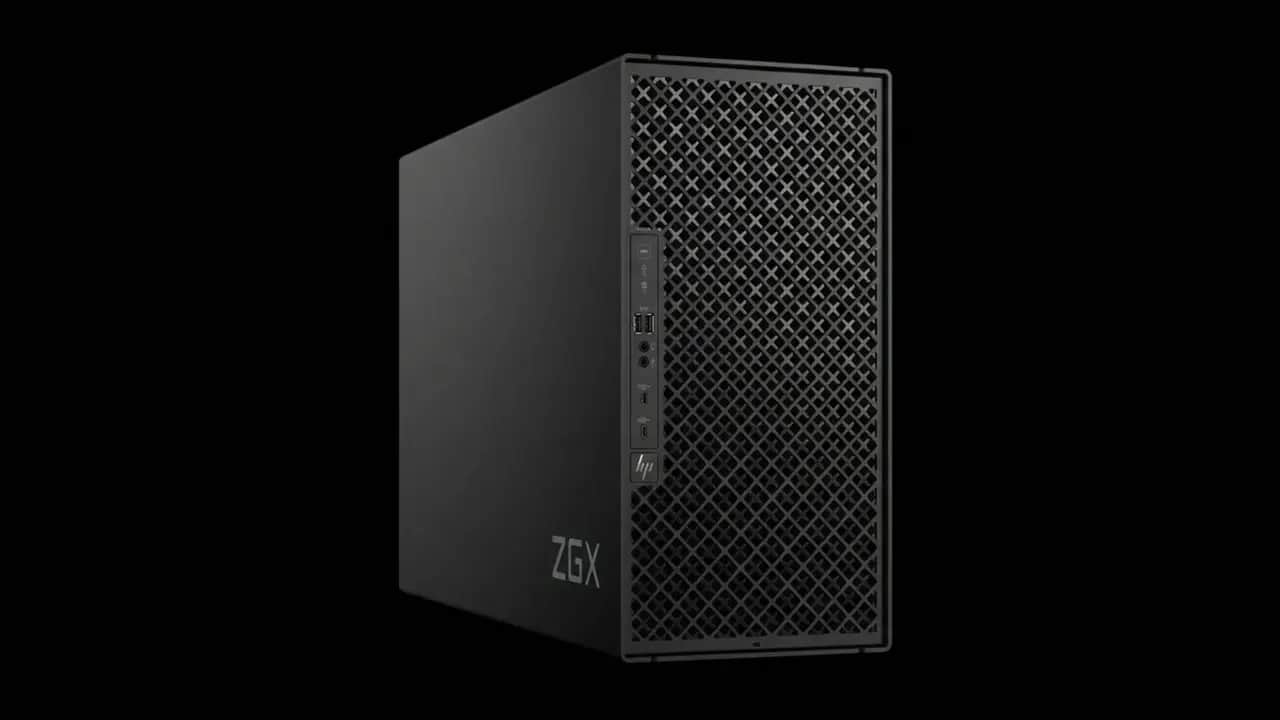
The HP ZGX Fury G1n combines an Nvidia GB300 Grace Blackwell Ultra processor with 748 GB of memory. The standard configuration costs $132,000, TechRadar reports.
The memory consists of 496 GB of LPDDR5X for the system and 252 GB of HBM3e for graphics processing. LPDDR5X runs at 6400 MT/s and is connected to the 72-core Arm Neoverse V2 Grace processor. HBM3e memory is integrated into the Nvidia Blackwell Ultra graphics processor. In selected configurations, additional graphics hardware can increase the available video memory to 276 GB.
Reported by techradar.com.
The workstation is intended, among other things, for working with large language models. According to TechRadar, it can locally fine-tune models with up to 100 billion parameters, and supports models of up to 1 trillion parameters for inference using FP4 quantization. Actual performance depends on the specific workloads.
To cool the components, HP equipped the device with a liquid-cooling system, while power is supplied by a 1600 W Titanium-certified unit. The workstation ships with Ubuntu 24.04 LTS. The Nvidia ConnectX-8 SuperNIC network adapter has two 400 Gbps QSFP112 connections, allowing several machines to be connected in a high-speed network.
In addition to the standard version, HP offers configurations with Nvidia RTX PRO 2000 and RTX PRO 4000 graphics cards. The former costs $133,000, while the RTX PRO 4000 version costs $136,000. The chassis can also be installed in a 5U rack, so the system can operate as a standalone computer or as part of rack infrastructure.
TechRadar notes that the ZGX Fury is unlikely to be aimed at ordinary desktop PC buyers: its potential audience is organizations that need substantial local computing resources. Its large memory capacity and support for demanding AI workloads are intended to enable some of these computations without complete reliance on remote infrastructure.