

Google unveils confidential TPU 8tx with AMD Epyc processors
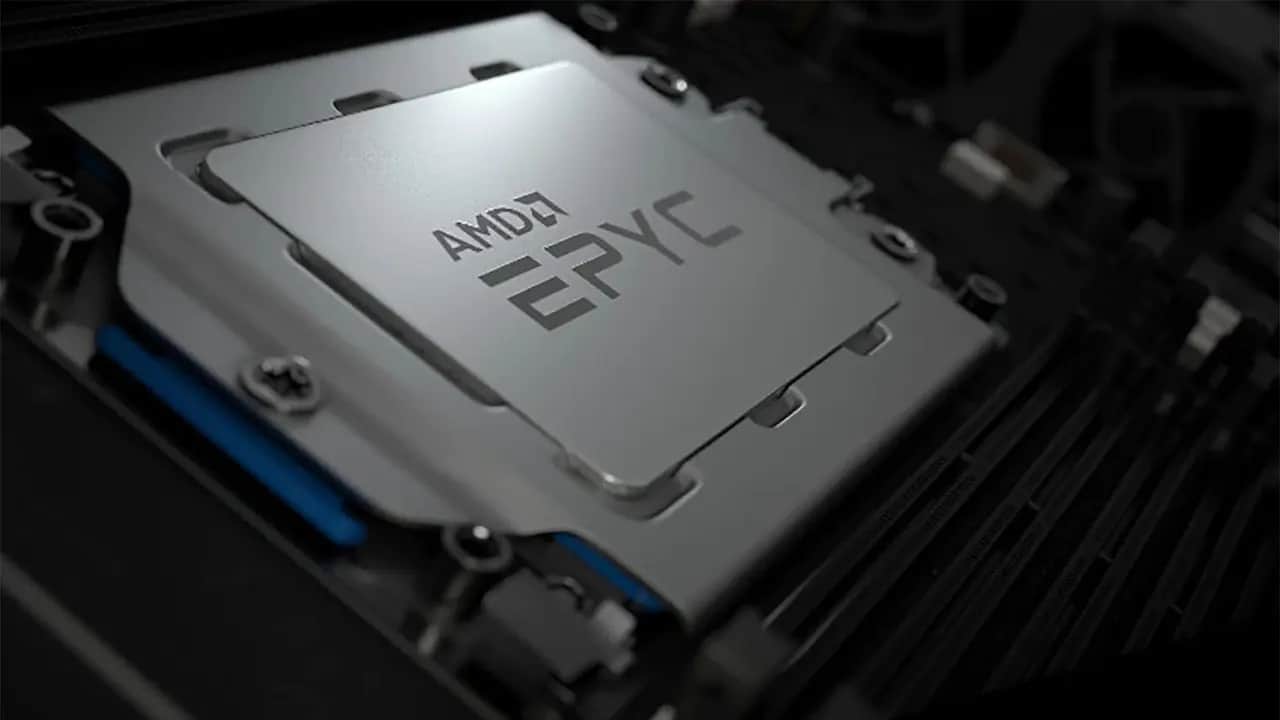
Google’s new system combines TPU 8t accelerators with fifth-generation AMD Epyc Turin processors. According to TechRadar, it was developed for confidential AI computing, and select customers will be able to deploy TPU 8tx in their own data centers.
TPU 8tx was announced alongside TPU 8i Max. Neither is a new chip model; both are configurations based on existing silicon. In April 2026, Google unveiled its main eighth-generation systems: TPU 8t for model training and TPU 8i for inference. Confidential 8tx expands the family by pairing the 8t accelerator with a server processor from another manufacturer.
Reported by techradar.com.
According to Taiwanese publication INSIDE, cited by TechRadar, 8tx retains the TPU 8t’s performance figures — 12.6 petaflops of FP4 computing and 216 GB of HBM memory. At the same time, the system uses the Boardfly network, also used by TPU 8i, which has lower latency. Google says latency could be reduced by up to two times compared with TPU 8t, with almost no impact on performance.
The company positions TPU 8tx for regulated businesses and government agencies. According to Google, they will be able to fine-tune models, distill them and train AI agents on private data without moving that data between clusters. This is intended to be useful in scenarios where sensitive information needs to be processed in a protected environment.
The AMD Epyc processor serves as the system’s host: according to AMD, it handles computing orchestration, data preparation and high-speed communication with the TPU. Security is provided in part by Secure Encrypted Virtualization (SEV). It works alongside the accelerator, extending the protected environment to the TPU. Before access to protected memory, the system verifies the identity of each accelerator and its security configuration.
AMD says that prompts, model weights and intermediate data are encrypted in the host processor’s memory and during transmission, while the TPU is hardware-isolated during operation. Google describes the result as protecting sensitive data and model weights even while they are actively in use. TechRadar reports these claims, citing the companies, rather than presenting them as independently verified test results.
Google has not directly explained why it chose AMD processors rather than its own Axion for the confidential system. Google introduced that processor in 2024 as the company’s first chip for data centers. TechRadar draws attention to Google’s documentation: supported Confidential VM configurations run on machines with AMD SEV or Intel TDX, while Axion is not listed. The documentation also says that TPUs currently cannot be connected to Confidential VM.
Another relevant factor is Google’s prior use of SEV in its products. According to AMD, Google security specialists thoroughly reviewed the company’s security processor firmware. AMD also says that SEV already underpins Confidential VM, Confidential GKE and Confidential Space, and is used in the confidential Spark and Dataflow services. This may explain why the choice of host processor for the new system is tied to existing security infrastructure, although Google has not given this explanation directly.
Citing ServeTheHome, TechRadar also links the choice of Turin processors to compatibility with the PCIe Gen5 x16 interface in TPU 8t. According to these reports, a processor supporting PCIe Gen6 would not have given the accelerators greater bandwidth. This is the publications’ explanation, not a reason officially given by Google.
Access to the system outside Google’s infrastructure is one practical feature of the announcement. Mark Lohmeyer, Google Cloud’s vice president of AI and computing infrastructure, told reporters that select customers will be able to deploy TPU 8tx in their own data centers. According to TechRadar, Google has not yet disclosed details of such deployments or several aspects of security, so customers will have to assess the claimed safeguards in practical use.