

Europe agrees on negotiating team for Ukraine, but disputes its mandate
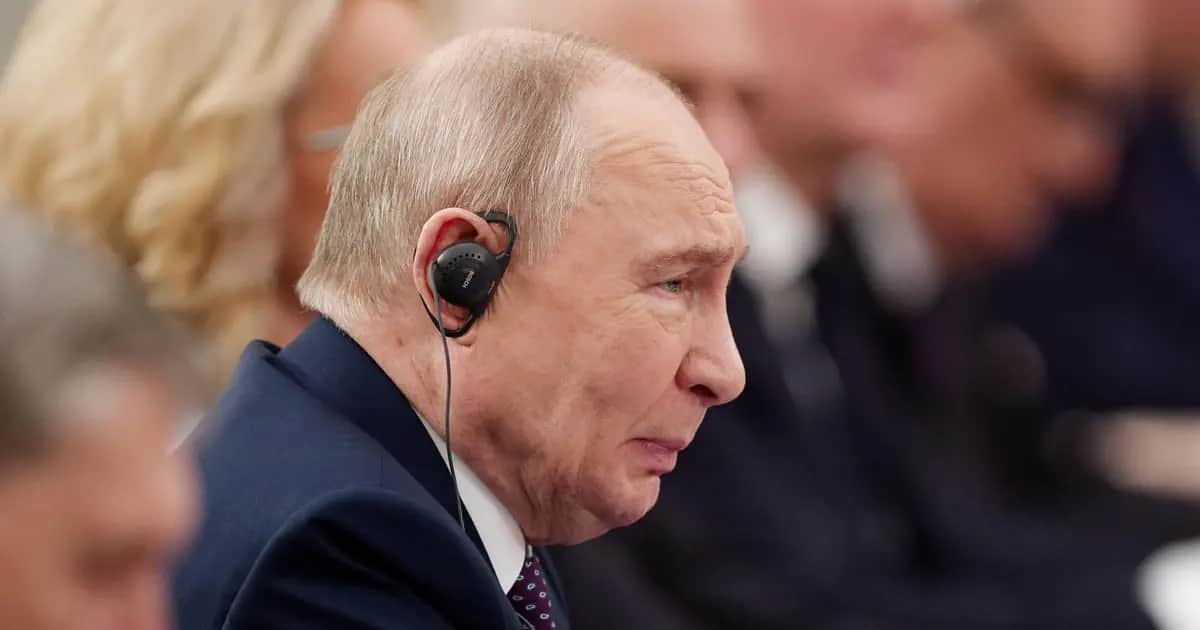
European leaders have agreed on who will represent them in future negotiations on Ukraine, but they have yet to reach a common position on what demands to take to Russia. According to POLITICO, EU countries differ over red lines, the sequence of steps and who should prepare the negotiating mandate.
The European team will include representatives of France, Germany, Italy and Poland, as well as the United Kingdom, NATO, the European Commission and the European Council. The decision on its composition was made after several days of disputes. Europe had previously been largely sidelined from negotiations between Russia, Ukraine and the United States in Abu Dhabi, POLITICO writes; Moscow and Washington indicated that the situation could change at future meetings.
Reported by politico.eu.
The main dispute now is not who will sit at the table, but what exactly Europeans should defend there. EU foreign policy chief Kaja Kallas is calling for Russia to be presented with the most far-reaching demands possible first, and for Europeans to then determine what concessions they could accept and which issues remain non-negotiable. Her position has been backed by ministers from several Baltic, Nordic and Eastern European countries.
Austria is proposing a less hard-line approach, including confidence-building measures. In a 15-point document circulated ahead of the foreign ministers’ meeting, the country proposed considering partial or limited ceasefires as a path toward a broader truce, as well as creating an international forum to oversee implementation of a possible peace agreement. Austrian Foreign Minister Beate Meinl-Reisinger described the document as a proposal for all 27 EU countries to jointly develop a position.
Another dispute is over who should determine the mandate for European participants. Two EU officials quoted by the publication believe the document should be prepared by member states’ ambassadors in the Coreper format, rather than by foreign ministers. They also favor a sufficiently flexible mandate so representatives can conduct real negotiations instead of being constrained by instructions set in advance. Kallas, by contrast, believes the work should be done by ministers, who meet in Brussels every month.
According to POLITICO, a possible mandate would bind representatives of the European Commission and the European Council, as well as advisers from France, Poland, Italy and Germany. It would not apply to representatives of the United Kingdom and NATO, meaning the team’s membership and the group of participants formally bound by common instructions would not fully overlap.
Eastern flank countries have also set out their views on the sequence of negotiations. Lithuanian Foreign Minister Kęstutis Budrys said a ceasefire should be agreed first, and negotiations on lasting peace should begin only after the fighting stops. Estonia’s representative, Margus Tsahkna, also called a ceasefire the first step, to be followed by Russia-Ukraine peace talks and then discussions on security guarantees for Ukraine and the region.
At the same time, European negotiators expect talks in Abu Dhabi to resume in the coming weeks, according to two unnamed EU officials, and expect to be at the table even as Russia continues its daily attacks on Ukraine. One senior EU official, quoted anonymously by POLITICO, explained this expectation as a pragmatic consideration: participants in the negotiations need to be able to make decisions.
Separately, Norwegian Foreign Minister Espen Barth Eide, whose country is not part of the agreed team, urged Europeans to draw on the experience of the Cold War. He cited the 1975 Helsinki Accords as an example of principles governing relations between states and stressed that the deployment of NATO forces in Alliance countries should not be a subject for bargaining with Russia. Arms control agreements, he said, would remain important after the war.