

Five topics at the EU summit in Dublin: Ukraine, AI and the battle for ECB jobs
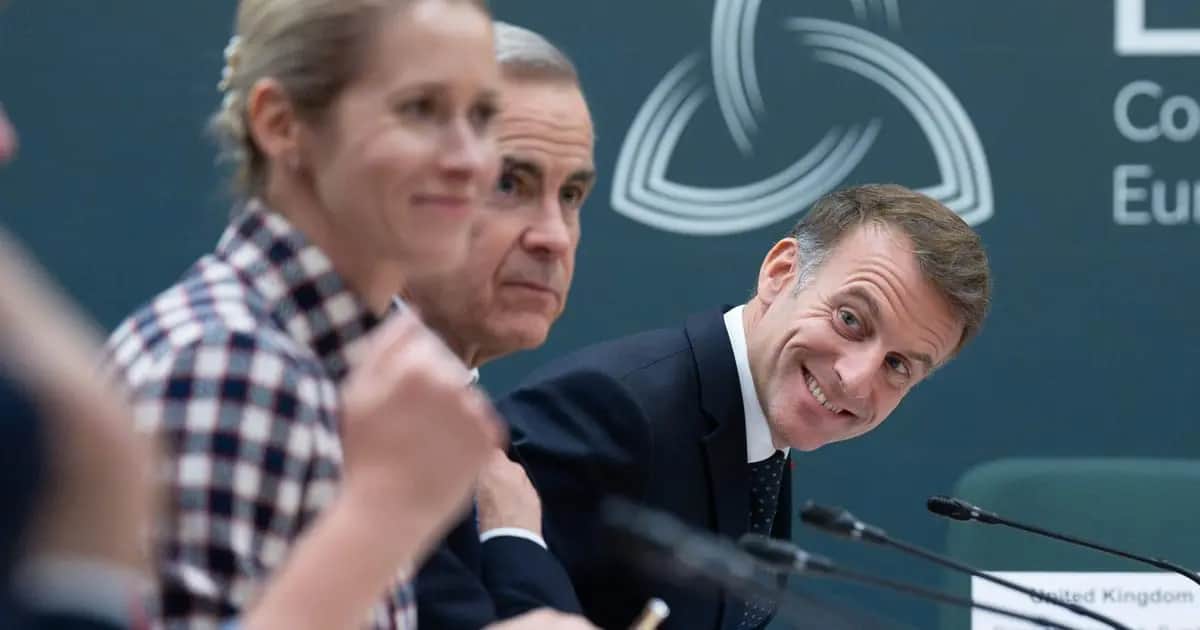
EU leaders gathered in Dublin for their first standalone discussion on artificial intelligence, but the meeting was also set to cover more urgent disputes: negotiations on Ukraine, funding for Kyiv, the EU budget and personnel changes at the European Central Bank. POLITICO reported on the summit’s five main topics.
European leaders were due to discuss how to develop their own capabilities in artificial intelligence — from computing power and cloud infrastructure to chips and models. One of the key disagreements concerned the goal: creating advanced models capable of competing with American and Chinese developers, or focusing on applications built on models that already exist. Another practical question was where to find the money for the computing resources needed. According to POLITICO, Mistral chief executive Arthur Mensch and AI researcher Geoffrey Hinton were also due to address the participants.
Reported by politico.eu.
Alongside the AI discussion, Ukraine was set to be one of the meeting’s most important topics. According to POLITICO, EU countries were divided over who would represent the bloc in future peace negotiations. European Council President António Costa sought clarity and a unified message from all 27 EU members. EU foreign policy chief Kaja Kallas believed that she and Costa should represent the Union. French President Emmanuel Macron, meanwhile, argued that Europe should first agree on its own proposals and vision for security, while German Chancellor Friedrich Merz supported the E3 format, involving Germany, France and the United Kingdom.
The question of representation became more pressing after US envoy Steve Witkoff said Europeans would be invited to the next round of negotiations. He said this on Thursday after meeting Vladimir Putin in Moscow. Earlier that week, Ukrainian President Volodymyr Zelenskyy said Europe should choose one representative, preferably by the end of November. However, as POLITICO noted, divisions remained within the EU over both the candidate and the format.
Leaders were also due to consider Ukraine’s funding needs: according to an estimate cited by POLITICO, Kyiv will be short of 70 billion euros next year. Merz linked aid to Ukraine to talks on the EU’s next long-term budget. That approach met resistance from governments that did not want to take on additional commitments. The discussion also concerns Europe’s influence over a possible future settlement: some members of the European Parliament proposed transferring frozen Russian assets to an EU-controlled entity so they could not be used in an agreement reached without Europe’s involvement. POLITICO expected Ukraine’s funding to be discussed again at the summit on 26–27 November.
The EU budget for 2028–2034 was not formally on the meeting’s agenda, but it was due to be discussed on the sidelines of the summit. A new negotiating document with possible compromises was expected around 21 November. POLITICO did not predict a breakthrough in Dublin: according to the outlet, Merz was due to use the meeting for bilateral talks, including with Macron. Attention was focused on whether the main contributors to the budget and the governments threatening to block a deal could narrow their differences.
The fifth topic was the battle for senior posts at the ECB. Following an earlier conversation on Thursday, Macron and Merz were due to discuss a successor to bank President Christine Lagarde. POLITICO named Spain’s Pablo Hernández de Cos and former Dutch central bank chief Klaas Knot as leading contenders. The contest is also linked to other personnel changes: Germany’s Isabel Schnabel and Ireland’s Philip Lane were due to leave the ECB’s Executive Board in 2027.
According to two people familiar with the discussions who spoke to POLITICO, Paris and Berlin were also vying for the ECB’s chief economist post. One source suggested Germany could secure the position by supporting de Cos’s candidacy. The outlet expected a deal on the appointments at the leaders’ meeting on 26–27 November. Spanish Prime Minister Pedro Sánchez and Dutch leader Rob Jetten, who backed candidates from their own countries, were due to miss the Dublin summit because of domestic political circumstances.