

DEEPX demonstrates DX-M1 butter test and claims lower chip temperature
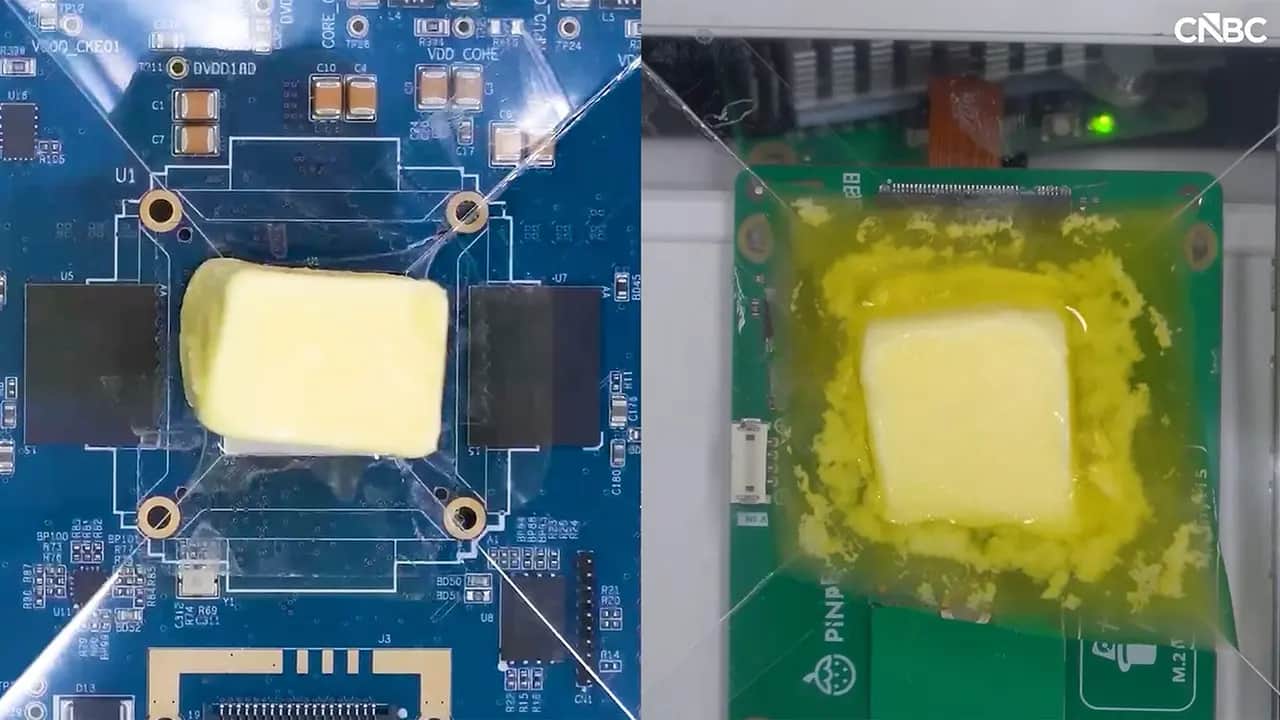
South Korean company DEEPX demonstrated its DX-M1 AI processor in an unusual test involving butter: according to Tom’s Hardware, it sizzled on unnamed competitor chips but remained solid on the DX-M1. The company’s CEO said its processor ran 25 to more than 40 °C cooler than competitors.
The demonstration appeared in a CNBC video, comparing the DX-M1 with unnamed AI chips. According to DEEPX CEO Kim Nok-won, the processors performed the same artificial intelligence task, but the butter melted on each one except the DX-M1. Tom’s Hardware described the test as a demonstration of differences in heat generation, rather than a comprehensive performance comparison.
Reported by tomshardware.com.
The publication also pointed to limitations in the comparison: the article did not specify how quickly each processor performed the test task. Tom’s Hardware also noted that chip heating can be reduced by lowering its power or operating frequencies. Therefore, without data on how quickly the work was done, the temperature difference alone does not provide a complete picture of the processors’ efficiency.
Tom’s Hardware noted that the DX-M1 and the company’s next chip, the DX-M2, are intended, among other things, for edge computing and robotics. This is a different segment from large data centers with powerful Nvidia graphics processors and cooling systems, which were discussed in a related CNBC article. Therefore, the butter test is not direct evidence that the DX-M1 can replace such server solutions.
According to The Elec, the DX-M1 has been manufactured using Samsung’s 5-nm process since August 2025. Tom’s Hardware reports that the chip has brought DEEPX orders worth approximately 13.3 million dollars. The publication does not provide details in this passage about the customers or the terms of supply.
DEEPX plans to make the DX-M2, using Samsung’s 2 nm process, its next product. According to Tom’s Hardware, the company intends to begin mass production in the second half of 2027. This is a plan, not a report that production has already begun.