

Pecherskyi Court Orders ZN.UA to Remove Articles About Borzykh; Editorial Team to Appeal
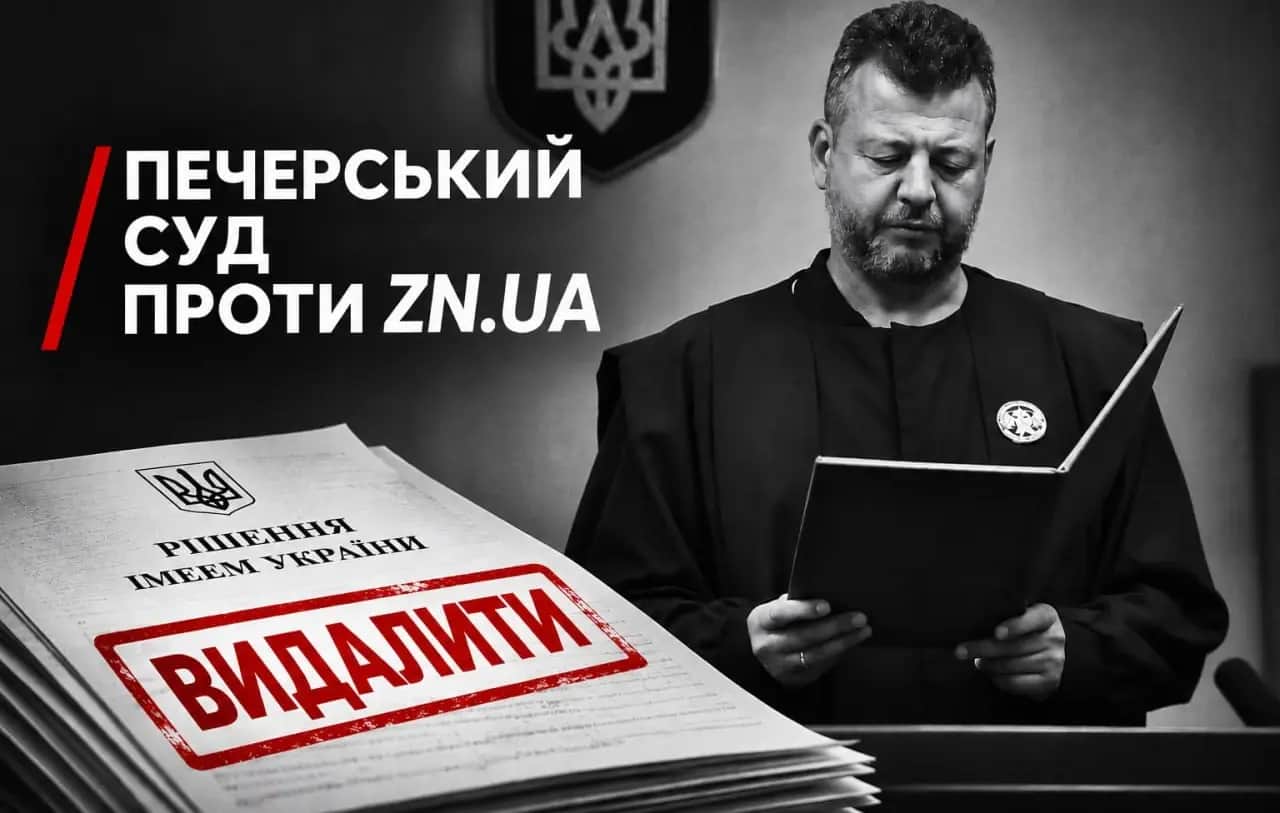
The Pecherskyi District Court of Kyiv partially upheld Dmytro Borzykh’s lawsuit against ZN.UA and editor Inna Vedernikova. The court ordered the removal of two articles about Borzykh, the deletion of certain passages from other publications, and the publication of a retraction; the editorial team said it would appeal.
The ruling was issued on October 13, and its full text is dated October 16. According to ZN.UA, the defendants’ lawyers gained access to the full text only on November 16. Judge Oleksii Sokolov ordered the outlet to remove in full articles about the NABU notifying Borzykh of suspicion and the High Anti-Corruption Court setting bail for him at 10 million hryvnias. The order also concerns the removal of passages from other articles, including the investigation “The Hacker Lawyers Case: How NABU Uncovered the Parasites.”
Reported by zn.ua.
At the same time, according to ZN.UA’s account, the court confirmed in its ruling that on April 1, 2025, NABU notified Borzykh of suspicion of organizing unauthorized access to the Unified State Register of Court Decisions. The court, the outlet writes, found that publishing his name and other details by which he could be identified violated the plaintiff’s rights, and deemed a number of statements in the journalistic reports inaccurate. Borzykh is a former deputy chief military prosecutor and is now a lawyer; his guilt in the criminal proceedings has not been established.
The court also ordered the payment of 33 280 hryvnias in court fees to Borzykh: ZN.UA is to pay 30 617,60 hryvnias, and Inna Vedernikova 2 662,40 hryvnias. According to the outlet, Borzykh’s lawsuit sought reimbursement of 500 thousand hryvnias in legal costs, including 300 thousand for legal assistance. The court left the issue of other expenses for separate consideration if the relevant evidence is submitted.
ZN.UA’s lawyer, Yevhen Vorobiov, said that, in his view, the court had not properly assessed the editorial team’s evidence or its arguments about the public interest. As an example, he cited a ruling by the High Anti-Corruption Court concerning the initial legal classification of the criminal proceedings, including under Article 368 of the Criminal Code. The lawyer said the court did not accept the document as confirmation of the journalist’s information because it was published in the register after the article appeared. Vorobiov disputes this approach: he believes that later publication does not change whether the information was accurate when the article was prepared.
Vorobiov also said that, in his assessment, the court had not properly taken into account the European Court of Human Rights’ case law on freedom of expression, the role of the press, and the protection of journalistic sources. Vedernikova’s representative, Roman Vasylniak, for his part, alleged procedural violations: according to him, the case was heard on its merits in a single session, which continued without him. The lawyer explained that he could not attend because of an air raid alert at the start of the hearing and asked for the proceedings to be adjourned; ZN.UA notes that the court received the request but continued the hearing.
Vasylniak believes the court had no grounds to hear the case in his absence, as this was the journalist’s representative’s first failure to appear. He also referred to the circumstances surrounding the case’s assignment, the recusals of two judges, and previously expressed doubts about Judge Sokolov’s impartiality. This is the defendant’s lawyer’s position; the article contains no separate assessment of these claims by the court.
Vorobiov said he would file a motion with the court to correct a possible clerical error concerning the date the full text was prepared. According to his preliminary calculation, the court fee for the defendants to file an appeal could be up to 40 thousand hryvnias; the lawyer is considering asking for it to be reduced or payment to be deferred. The amount is preliminary, and, according to the outlet, the appeal has yet to be filed.
The lawsuit concerned 12 publications about the so-called “hacker lawyers case.” According to NABU, the suspects gained illegal access to restricted court decisions, including in high-level corruption cases, and passed this information on to clients. ZN.UA also reported that the Institute of Mass Information and media lawyers had previously seen signs of a SLAPP—a lawsuit that, in their assessment, may be used to pressure journalists through lengthy proceedings and substantial financial demands.
The ZN.UA editorial team described the case as part of a broader debate about whether media outlets can name criminal suspects before a conviction if the cases are in the public interest. In an editorial comment, the outlet linked the issue to a provision of the Civil Code on using the name of a suspect and called for a united position from the media community, legislative changes, and effective protection for journalists against SLAPP suits. This is the editorial team’s argument, not a separate finding in the court ruling.