

Ukraine’s Defence Intelligence reports coal industry crisis in occupied Luhansk region
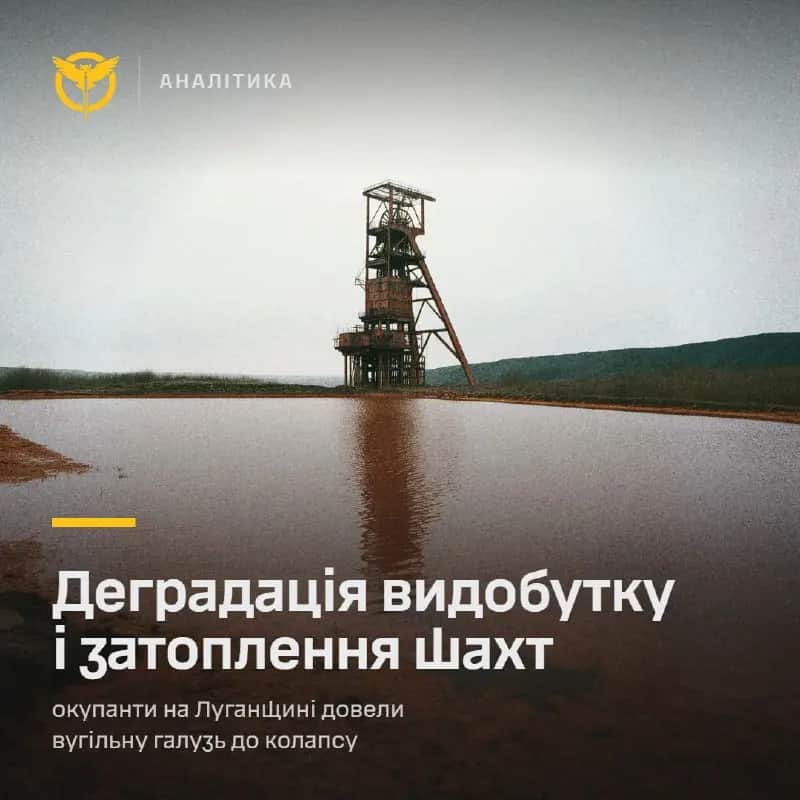
Coal production in the temporarily occupied Luhansk region is declining, mines are closing, and businesses are accumulating wage debts to workers. Ukraine’s Defence Intelligence Directorate said this, describing the industry as being in crisis.
Among the signs of decline, the Defence Intelligence Directorate cites the cessation of operations by the Russian company Donetsk Coal and a significant deterioration in the operating performance of the Rodina fuel and energy complex. Its key asset is the seized Bilorechenska mine. According to the agency, Rodina needs at least 1,5 billion rubles in financial injections to continue operating.
Reported by Головне управління розвідки МО України.
According to the Defence Intelligence Directorate, the occupation authorities forecast that annual coal production will fall by 65% in 2026 compared with the previous year. The agency also says the occupiers cannot ensure the production volumes planned for the region in 2027.
The occupation administration attributes the decline to an acute lack of funding, difficulties in obtaining loans, rising corporate debt, a shortage of skilled workers, mine closures and problems with longwall faces. The Defence Intelligence Directorate, for its part, describes these circumstances as the consequences of prolonged occupation. In the agency’s assessment, metallurgy, the chemical industry, mechanical engineering, energy and coke production are deteriorating alongside coal mining.
According to the Defence Intelligence Directorate, the crisis is also affecting related sectors: processing and chemical plants are shutting down, and the energy sector is worsening. Job losses and prolonged wage delays are lowering residents’ standard of living, while the lack of employment prospects and stable income is prompting them to leave the region.
The shutdown of water-treatment and drainage systems poses a separate threat. According to the Defence Intelligence Directorate, this is causing mines to flood and could lead to groundwater contamination, land subsidence, damage to buildings and environmental deterioration across large areas. The agency says concentrations of iron, sulphates, chlorides and heavy metals are rising in mine water. If this water enters soils and aquifers, it threatens to contaminate agricultural land and restrict its future use.