

Chinese Prototype Ejects EV Battery During a Fire
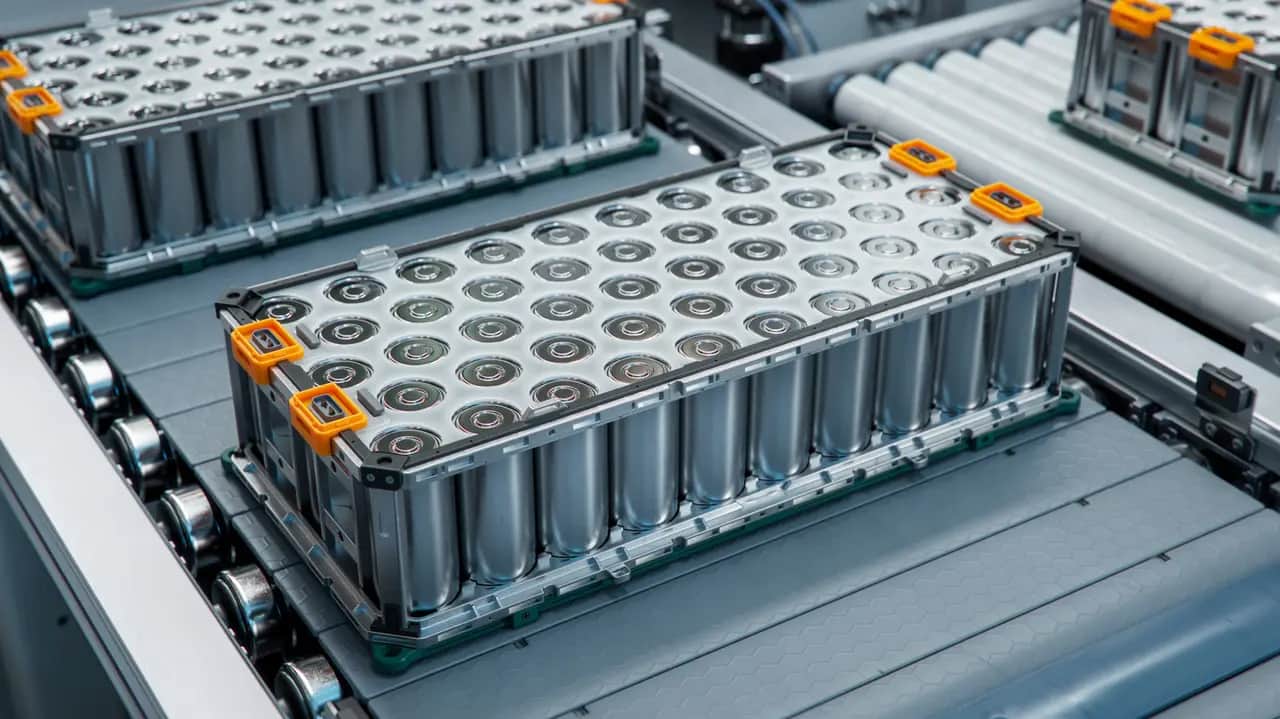
Chinese researchers are testing a system designed to detect the start of a fire in an electric vehicle battery and eject the battery pack to the side of the car in about a second. Engadget reports on the prototype and its limitations.
According to Engadget, the system uses a gas generator similar to the one that deploys an airbag. When the battery management system detects signs of a fire, the gas generator ejects the battery pack to the side. It is expected to come to a stop about 10–20 feet from the vehicle.
Reported by engadget.com.
The idea does not mean the technology is ready for use. The team, Engadget writes, acknowledges that it is at an early stage. One obvious question is where the heavy pack will land: if other cars or people are nearby, ejecting the battery could itself create a new danger.
A project worker told Chinese outlet iFeng that the hardware development grew out of research into side-loading battery swaps. According to the worker, the system was intended to be disabled in densely built-up areas and where pedestrians and different types of vehicles are moving nearby. However, according to 36Kr, the software that would distinguish such locations has not yet been developed.
There is also uncertainty about the demonstration’s origins. The test video attributed the development to the China Collision Repair Technology Center and Joyson Electronics, a Shanghai-based auto parts supplier. But Joyson told outlet Yicai that it had no cooperation or joint development agreement with the center. Chery’s iCar brand, whose 03 SUV was similar to the test vehicle, also said on Chinese social media that it had no connection to the demonstration.
Yicai could not find a business registration for the China Collision Repair Technology Center. A source told the outlet that the center belongs to Maite Group, which works in vehicle repair and after-sales service; the company itself did not respond to journalists’ calls. Engadget does not provide confirmation that the center and Joyson jointly developed the prototype shown.
Interest in such solutions is linked to the difficulty of extinguishing battery fires. During thermal runaway, a lithium-ion cell releases heat faster than it loses it. According to UL Research Institutes, the temperature can rise by more than 20 °C per minute and exceed 300 °C; the process may be accompanied by the release of gas, smoke or flames.
In a study published in August 2026, the UL Fire Safety Research Institute tested firefighting methods on 18 electric vehicles and found that none stopped thermal runaway once it had begun. Engadget cites this as one argument for the idea of moving a dangerous battery away from people in the cabin, although this approach has risks of its own.
Automakers are also considering alternative designs. Stellantis’ U.S. division filed a patent application for a system that drops a faulty battery after a switch is pressed in the cabin or trunk; after that, a separate motor is intended to move the car away. A 2024 joint patent by Hyundai and Kia provides for a temperature sensor, but the vehicle must be stopped and the driver must pull a lever to drop the battery.
There are other safety measures, too. According to Engadget, in July 2026 China introduced a mandatory standard requiring that a battery pack not catch fire or explode if a cell undergoes thermal runaway. France’s Renault, for its part, offered automakers free licenses for a port through which firefighters can pump water into a battery pack.