

Chinese Military University Develops Drone to Find Wounded and Administer Medication
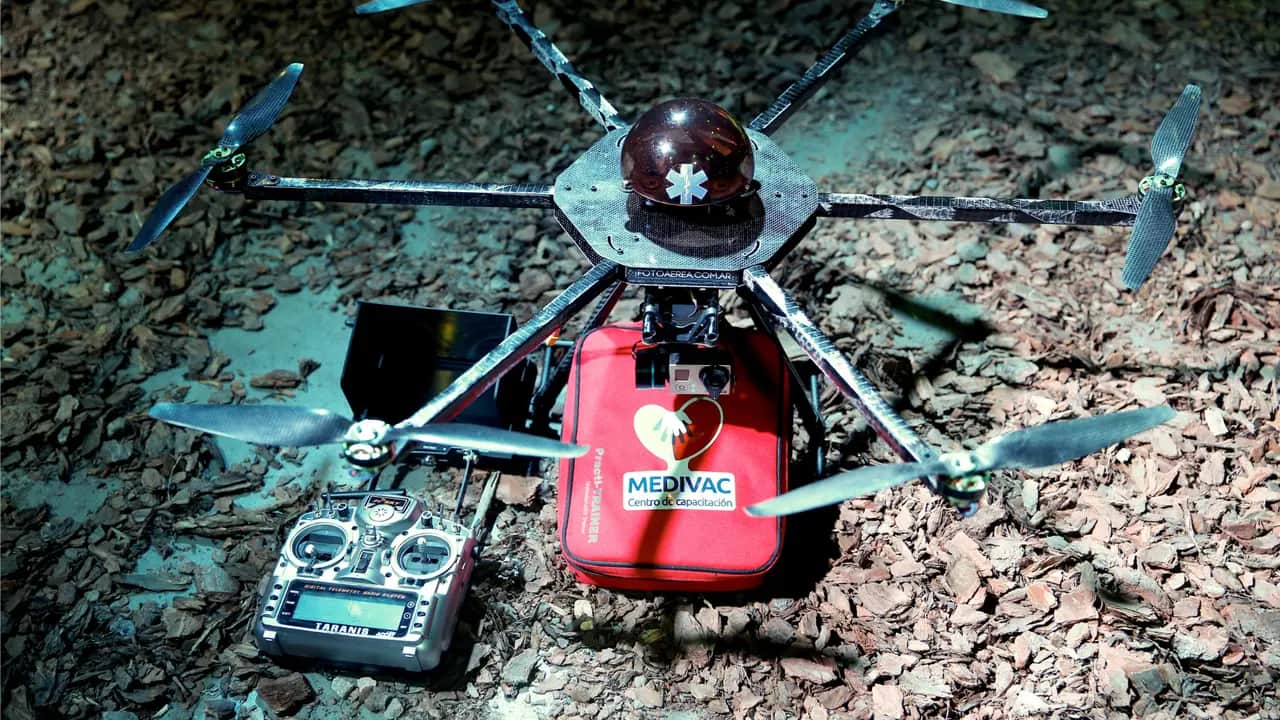
China’s Air Force Medical University has developed a drone to search for casualties that can administer medication remotely using darts containing painkillers. Tom’s Hardware reported this, citing China’s Global Times; the aircraft is still at the experimental stage.
According to Tom’s Hardware, Global Times reported on the first drone in the People’s Liberation Army of China designed to search for casualties and capable of delivering medication to wounded troops. University representative Wang Jianqi told the publication that the drone can inject medication into a person’s muscle from a distance. He said the aircraft can deliver emergency medication wherever it can fly, thereby buying time for further treatment.
Reported by tomshardware.com.
Remote medication delivery is also intended to reduce the risk to medical personnel, who would otherwise have to approach a wounded person in a dangerous area. However, the available description does not mean the drone can independently assess a person’s condition or replace medical care: Tom’s Hardware notes that the drone is at the experimental stage and that its practical capabilities have significant limitations.
In particular, the casualty’s vital signs and the nature of their injuries must be assessed before medication is administered. Wang also pointed to the difficulty of moving wounded people: getting a service member who cannot move onto the drone without assistance may be difficult or altogether impossible. Thus, the function described concerns delivering medication, not a complete process of examination, treatment and evacuation.
Tom’s Hardware links the idea to the concept of the “golden hour” in military medicine. According to this concept, receiving care within the first hour after being wounded gives a person the greatest chance of survival. Delivering emergency medication without a medic having to approach directly could help buy that time, but the need to assess the wounded person’s condition first remains a significant obstacle to using the technology.
Medical applications for drones are being developed amid their wider use in the military. Tom’s Hardware reports that drones are used on the front lines, among other things, for reconnaissance and combat missions, while drone-assisted medical care and evacuation are currently being tested in Ukraine and at military medical facilities in China. This is the broader context for the development, not evidence that it is ready for practical use.