

CERN is dismantling the collider to install niobium-tin magnets
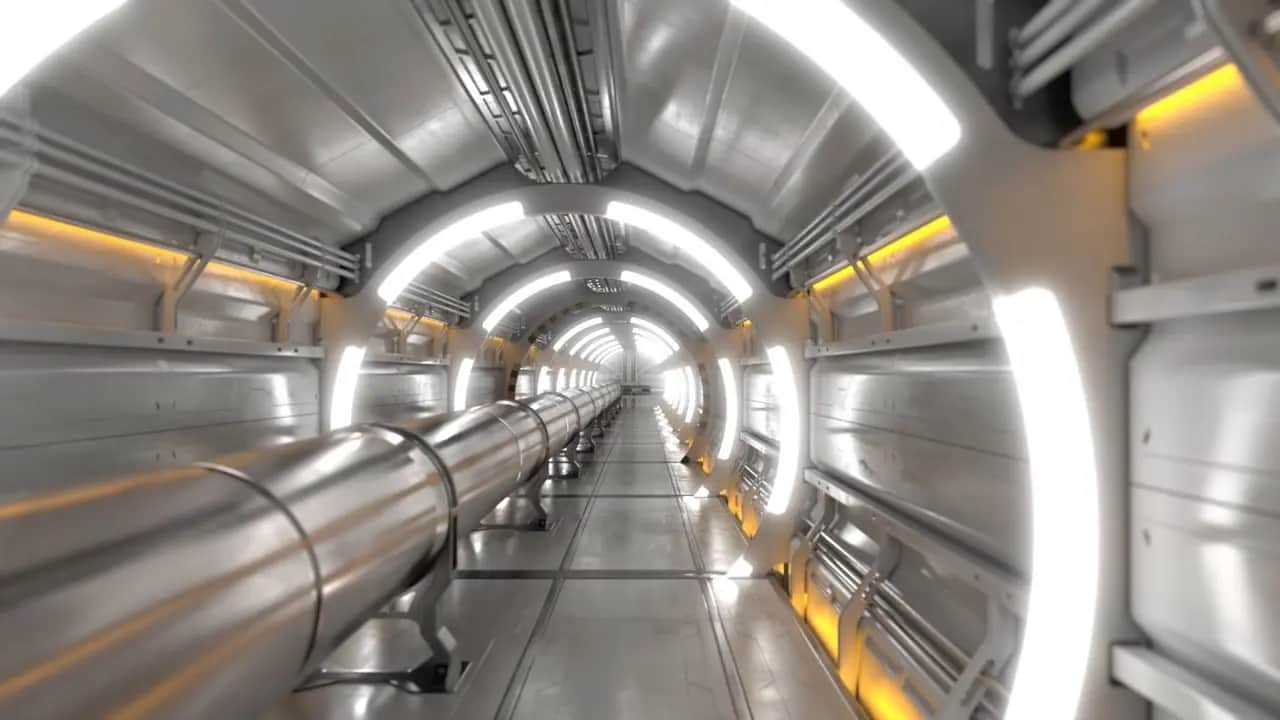
CERN is dismantling the Large Hadron Collider to replace 28 superconducting magnets, including those that focus proton beams before collisions. According to TechRadar, niobium-titanium magnets will be replaced with niobium-tin quadrupoles—the first magnets of this type designed to operate in an accelerator.
The collider was switched off at the end of June 2026. According to TechRadar, since 7 September, teams have been working on both sides of the ATLAS and CMS experiments to dismantle the machine. The magnets being removed include the inner triplets, which squeeze proton beams before collisions; replacing them is intended to focus the beams more tightly at the interaction points.
Reported by techradar.com.
The new magnets are made from niobium-tin (Nb3Sn), which can operate at much stronger magnetic fields than niobium-titanium (NbTi). However, once formed, this material is brittle and sensitive to strain. While NbTi can be processed much like copper wire, finished Nb3Sn cannot be wound: the coils are made using the wind-and-react method, TechRadar explains.
The manufacturing challenges are reflected in the number of rejected coils: 250 coils were made as part of the program, and 25 were rejected because of human error or unsuitable electrical or mechanical properties. One coil was scrapped over suspicions that a metal particle trapped between it and a protective component may have affected its performance. TechRadar links the manufacturing figures to a study published on 24 September 2026 in the journal IEEE Transactions on Applied Superconductivity and to an article in IEEE Spectrum.
The quadrupoles will have a 150 mm aperture—more than twice the 70 mm aperture of the magnets being removed. The wider opening allows the beam to expand as it passes through the triplet, while the magnets bring it to a smaller spot at the collision point. The new 7.2-meter quadrupoles, according to TechRadar, are the longest Nb3Sn magnets of this type.
The launch of the upgraded High-Luminosity Large Hadron Collider (HL-LHC) is now planned for June 2030—about a year later than originally scheduled. After the upgrade, the number of proton collisions at each beam crossing is expected to rise from about 60 to 140–200. This is expected to give researchers more chances to detect rare phenomena and increase the amount of data available for analysis.
TechRadar calls the HL-LHC’s 30 quadrupoles the closest example yet of series production of Nb3Sn accelerator magnets. The publication notes that experience with this facility is important for possible future projects that would require a much larger number of powerful magnets.