

Cannabis Farms Could Be Converted Into Small Data Centers
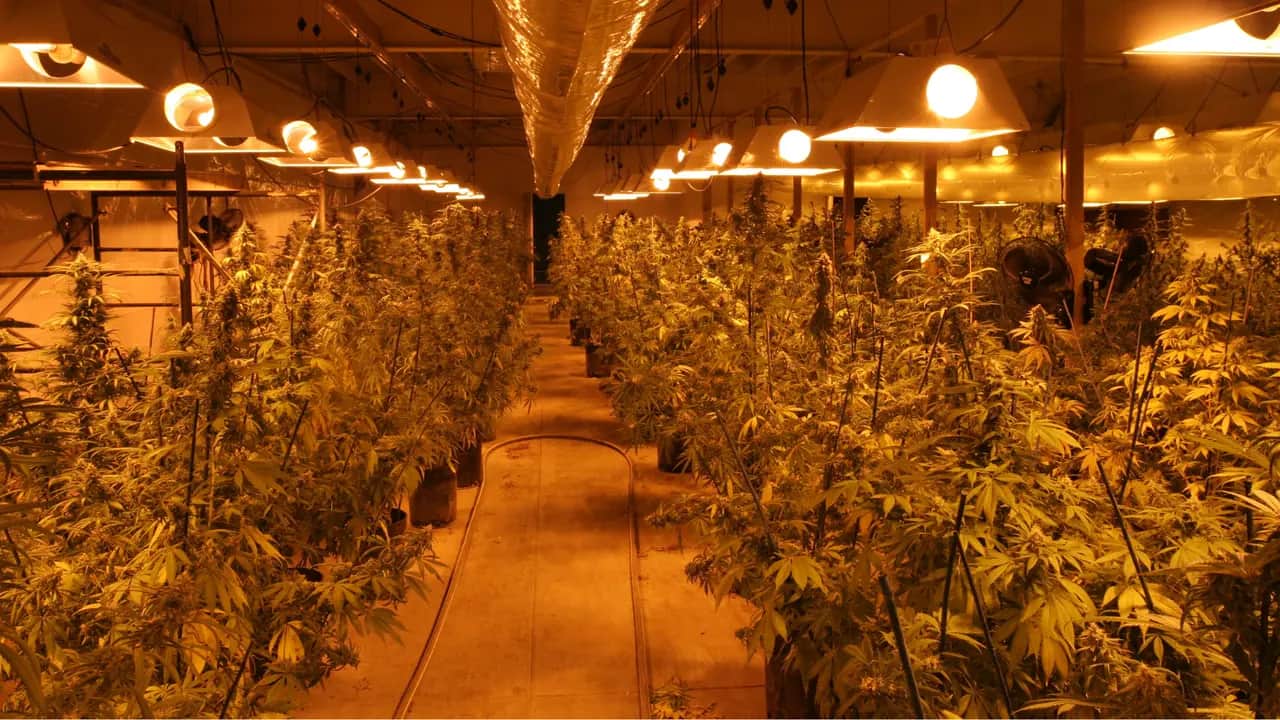
As cannabis prices fall, some producers are considering selling their facilities or converting them into small data center nodes. According to Tom’s Hardware, the existing capacity and infrastructure at these farms could be an advantage, but the transition would require investment and would not guarantee a profit.
Tom’s Hardware links interest in conversions to difficulties in the cannabis industry: competition, costs and taxes are rising, while demand is shrinking. Citing Arizona Public Media, the publication reports that cannabis sales peaked in 2024 and that oversupply drove prices down. As a result, some producers are looking for ways to use their current sites differently.
Reported by tomshardware.com.
Mo Asnani, the former owner of two D2 dispensaries in Tucson, told Arizona Public Media that more cannabis is grown in Arizona than is consumed in the state, and that some market participants are leaving cultivation. He said greenhouses and other facilities could potentially be converted into small data center nodes. Asnani linked the idea to decentralization: as he described it, such nodes would give people more control over their own data.
The publication gives the example of a 32 850-square-foot facility in Kalamazoo, Michigan. It is currently connected to 1.5 MW of electrical capacity, which could be increased to 2.5 MW in less than a year and, over the long term, to 15 MW. The farm also has a fiber-optic connection and an HVAC system for climate control. These features could be useful for a data center, although they do not in themselves mean that the facility is already being converted.
Tom’s Hardware describes repurposing existing buildings as adaptive reuse. Tucson City Council member Paul Cunningham called the possibility potentially more acceptable to the community than building large, purpose-designed data centers. At the same time, a building’s previous use of significant amounts of water and energy does not eliminate the need to assess whether it is suitable for a new function.
Electricity demand could be an obstacle. Niki Crear, vice president of acquisitions at real estate investment trust New Lake Capital Partners, explained that operators are looking for sites with available electricity, dense fiber-optic networks and favorable tax conditions. Even if farms already have more powerful connections than ordinary buildings, data centers often require two to three times as much electrical capacity; upgrades, she said, can take up to five years.
In addition to technical requirements, projects could face opposition from neighbors, zoning restrictions, moratoriums and regulatory procedures. A small scale does not necessarily mean lower costs, either: Tom’s Hardware notes that smaller operators may not get the favorable equipment purchasing terms available for large orders. Converting a farm into a data center therefore remains a possible option, not a guaranteed way out of financial difficulties.
Despite these risks, converted sites could interest operators looking for locations for computing capacity amid community opposition to large new data centers. Tom’s Hardware cautions that a former farm would have to meet most of an operator’s requirements; conversion itself does not eliminate the need for adequate electricity, network connectivity and economically viable upgrades.