

AMD promotes Mext: flash memory could halve servers’ need for DRAM
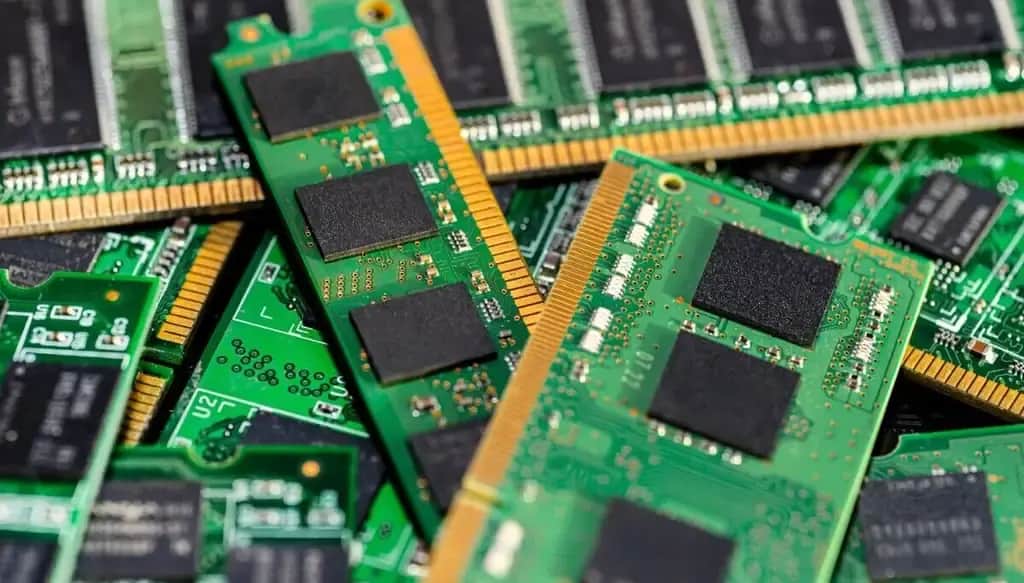
AMD proposes using Mext to move infrequently needed memory pages from DRAM to flash memory, reducing the amount of more expensive RAM in servers. Under the company’s commercial offer, a Mext license bundled with a new Epyc server is meant to deliver up to 99% of performance with half the DRAM.
The Register reports this, citing Mezha. AMD acquired Mext in June. Gary Smardon, Mext’s former head and now an AMD corporate vice president for business development, estimates that businesses could save up to 83% on server costs by replacing some RDIMMs with flash memory. He says customers have already saved $5 million on DRAM for the first 145 systems on which the software was deployed.
Reported by Mezha.
Mext’s idea is not to keep memory pages in DRAM when an application rarely accesses them: they are moved to flash memory and returned before they are needed. Smardon believes memory can account for 60–90% of a server’s cost. He also cites an estimate that flash memory is 50 times cheaper per bit and consumes 30 times less energy per bit than DRAM, but operates 500 times more slowly.
To support the approach, Smardon cited a research paper by Meta: according to The Register’s account, 50% to 80% of memory pages went unused for five, ten minutes or longer. To keep slower flash memory from affecting performance too much, Mext uses machine learning to predict which pages will be needed next and returns them to DRAM in advance.
According to Smardon, the foundation of Mext’s model is a transformer derivative that predicts the next memory page, rather than the next word. It is trained on one Epyc core in less than a second, after which the model is gradually refined and retrained. Training takes place on the CPU, so a separate GPU is not required.
Under the proposed setup, an Epyc server could have one terabyte of DRAM and use Mext for the next terabyte. The company initially focused on tasks with large memory requirements, including electronic design automation (EDA) and content creation. Support was later extended to databases and latency-sensitive agentic AI pipelines.
However, results depend on the application and on how much memory is moved to flash. In Synopsys PrimeTime tests, Smardon says, moving half the memory preserved 95% of performance compared with a DRAM-only configuration. In another test, AMD’s configuration with 25% DRAM and 75% flash memory delivered 80% of baseline performance. The Mext team also says Apache Spark retains 99% of its performance when flash memory replaces half of the DRAM.
Virtualized systems have a particular consideration: according to Mezha, Mext requires one core for each virtual machine or VPC, so overhead increases with the level of virtualization. The Register asked AMD to clarify whether a similar limitation applies to container runtimes; the available account does not include the company’s response.
AMD expects some customers to accept a degree of reduced performance in exchange for needing less DRAM. The company links the offer to limited memory availability amid the expansion of AI data centers; the performance figures are claims and test results reported in the article, not a universal guarantee for all workloads.