

Agreement to protect nearly 50,000 acres of walrus habitat in Alaska
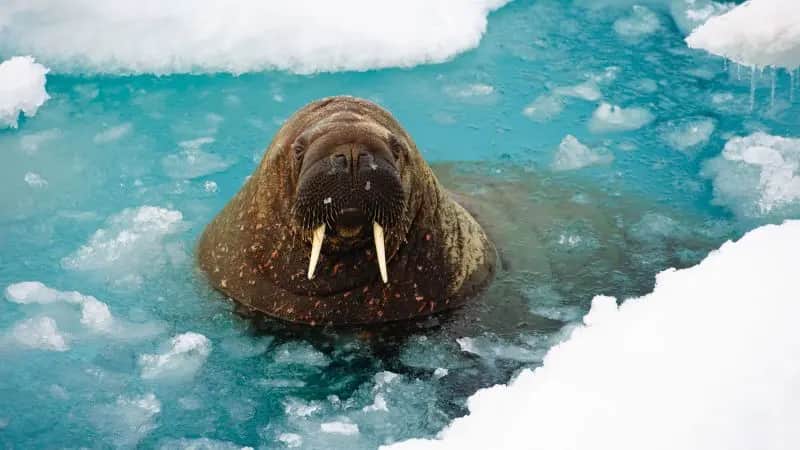
The Conservation Fund has reached an agreement with the Kuukpik Corporation to protect nearly 50,000 acres of land near the Alaskan village of Point Lay, where Pacific walruses gather in large numbers onshore. According to CNN, the plan is intended to limit human disturbance while preserving local residents’ access to natural resources.
The area slated for protection includes the barrier islands near Point Lay. The fund reached the agreement with the Kuukpik Corporation, an Alaska Native village corporation that owns the land. In return for protecting the area, Kuukpik will receive a payment, though the amount was not disclosed. According to CNN, the funds are intended to strengthen the community’s financial security and help residents avoid pressure to sell the land for oil and gas development.
Reported by CNN.
The agreement is intended to protect walruses from human activities, including resource extraction, commercial events and tourism. At the same time, residents will retain access to natural resources needed for their livelihoods. Point Lay is located on the edge of the National Petroleum Reserve in Alaska, an area where resource development, including fossil fuels, is under consideration. Combining conservation with the community’s needs is an important part of the agreement.
Larry Selzer, president and CEO of The Conservation Fund, told CNN that this model makes it possible to work with a landowner: the area can continue to be used for economic activity while important wildlife habitat is protected. Selzer said the decision to permanently give up certain rights was a significant step for village elders. Developing the project took ten years because the parties needed to build trust.
Kuukpik Corporation board chair Willard Neakok said the partnership is intended to create opportunities and help preserve Iñupiat heritage for future generations. The local community’s connection with walruses is practical as well as cultural: the animals are a source of food, and traditions associated with them date back thousands of years. According to CNN, the agreement also provides support for this local way of life.
Walruses’ reliance on land is linked to changes in the Arctic. For about two decades, the sea ice on which the animals rested near feeding grounds, gave birth and nursed their calves has been disappearing. In late summer, it often retreats beyond the shallow continental shelf into deeper waters, where walruses have more difficulty finding food on the seafloor. As a result, the animals are increasingly forced ashore; the large gathering at Point Lay has become a new part of their lives.
In winter, Pacific walruses are on the pack ice of the Bering Sea. Males remain there year-round, while females with calves migrate north to the shallow waters of the Chukchi Sea to feed. The gathering near Point Lay began in 2007 with a few thousand females and calves. Now about 200,000 animals gather there—nearly all Pacific walrus females and their calves, according to CNN. The outlet calls it the largest walrus haulout in North America.
Such large gatherings can be dangerous. Walruses are easily frightened, and even a minor disturbance can trigger a mass rush toward the ocean, in which young animals may die in a stampede. According to John Wroth of The Conservation Fund, hundreds, and sometimes thousands, of calves die in such incidents. The animals may be alarmed by low-flying aircraft, vessel traffic or tourists who come to see them; sometimes polar bears are to blame.
Wildlife biologist Anthony Fischbach of the U.S. Geological Survey told CNN that the Pacific walrus population had been relatively stable, but the disappearance of sea ice is creating new conditions and posing a threat to the animals. Marine scientist Chelsea Koch of American University, who did not comment specifically on the agreement near Point Lay, called conservation approaches that combine protection of important habitats with support for local management promising. She emphasized the importance of residents taking part in decisions and of preserving their rights and access to resources.