

AI mosquito trap could speed up dengue surveillance in Florida
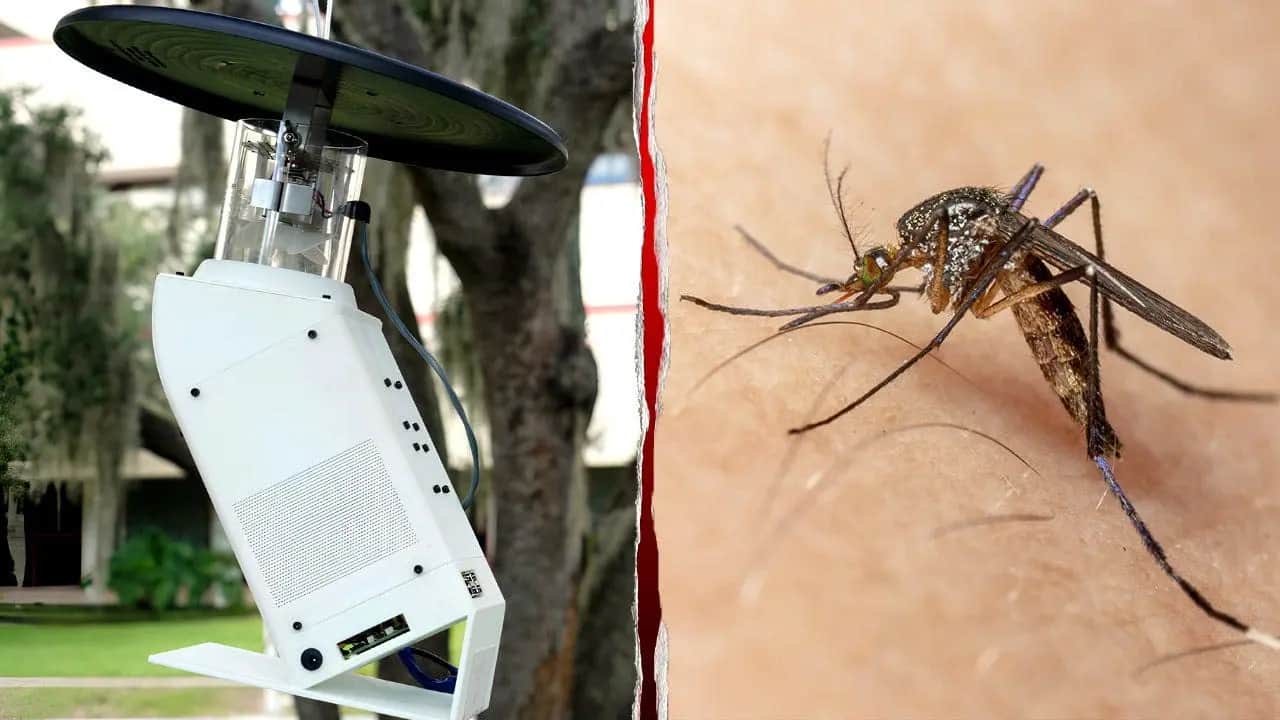
Researchers at the University of South Florida have developed a system that uses artificial intelligence to identify mosquito species from photographs. In laboratory tests, its accuracy exceeded 98%, and its developers aim to help mosquito control agencies get data faster amid a dengue outbreak in Florida.
According to Fox News, citing the Florida Department of Health’s latest available weekly report, as of 31 October the state had recorded 524 locally acquired dengue cases, meaning people were infected by mosquitoes in the region rather than during overseas travel. Hillsborough County accounted for 407 cases. The county, where Tampa is located, is experiencing an outbreak; on 13 November, local authorities extended the state of emergency until 19 November.
Reported by foxnews.com.
The system is being developed by Digitomy, a startup founded by University of South Florida researchers. Associate Professor Ryan Carney and Professor Sriram Chellappan are involved in its development; work on it has been underway since 2018. The team aims to reduce the time specialists spend identifying insects under a microscope and provide mosquito control agencies with useful data more quickly.
The trap can be hung from a low branch or placed on the ground. A light or bait attracts mosquitoes, and a small fan draws them inside. When the insects land on a sticky surface, two built-in cameras photograph them; an algorithm then matches the images against a large database and identifies the species. The system also identifies the mosquito’s sex and can determine whether it has recently fed on blood. According to Fox News, species identification was more than 98% accurate in laboratory tests.
This is important, among other reasons, for detecting Aedes aegypti, the species that, according to the Fox News report, predominantly transmits dengue in Florida. At the same time, the system identifies a mosquito capable of carrying the disease; it does not establish whether a particular insect has the virus. A separate laboratory test is needed to confirm infection. Thus, the trap’s results could help monitor species but do not replace testing for the virus.
Conventional species identification can take two to three days because insects often need to be examined under a microscope. Digitomy expects its system, which uses AI and cloud computing, to deliver results the same day. The information is intended to be sent to a mapping dashboard so agencies can see where particular species are appearing and decide where to focus control measures. This is a planned capability of the system, not a guarantee that an outbreak can be stopped.
Trap data have already been integrated into a private layer of the Global Mosquito Observations Dashboard, a mosquito observation dashboard that also contains more than half a million reports from members of the public. The developers believe that combining automated data collection with reports from people could complement existing early-warning systems for dengue and West Nile virus. According to the Fox News report, faster information could support a quicker response, especially in places with limited resources for mosquito control.
The technology has already been tested at the University of South Florida and in collaboration with St. Johns County, where St. Augustine is located. The team is now preparing for field testing in Hillsborough County, which has been particularly affected by the outbreak. Laboratory results do not yet mean that the system’s accuracy has been confirmed in real-world conditions.
The startup is working with USF’s technology transfer office to license the system to manufacturers that already produce mosquito traps. The university has not announced a consumer launch date or retail price. In summer 2026, Digitomy received a $25,000 grant from the USF Research Foundation’s Bull Ring accelerator; the funds are intended to accelerate the licensing and commercialization of the university-developed technology.